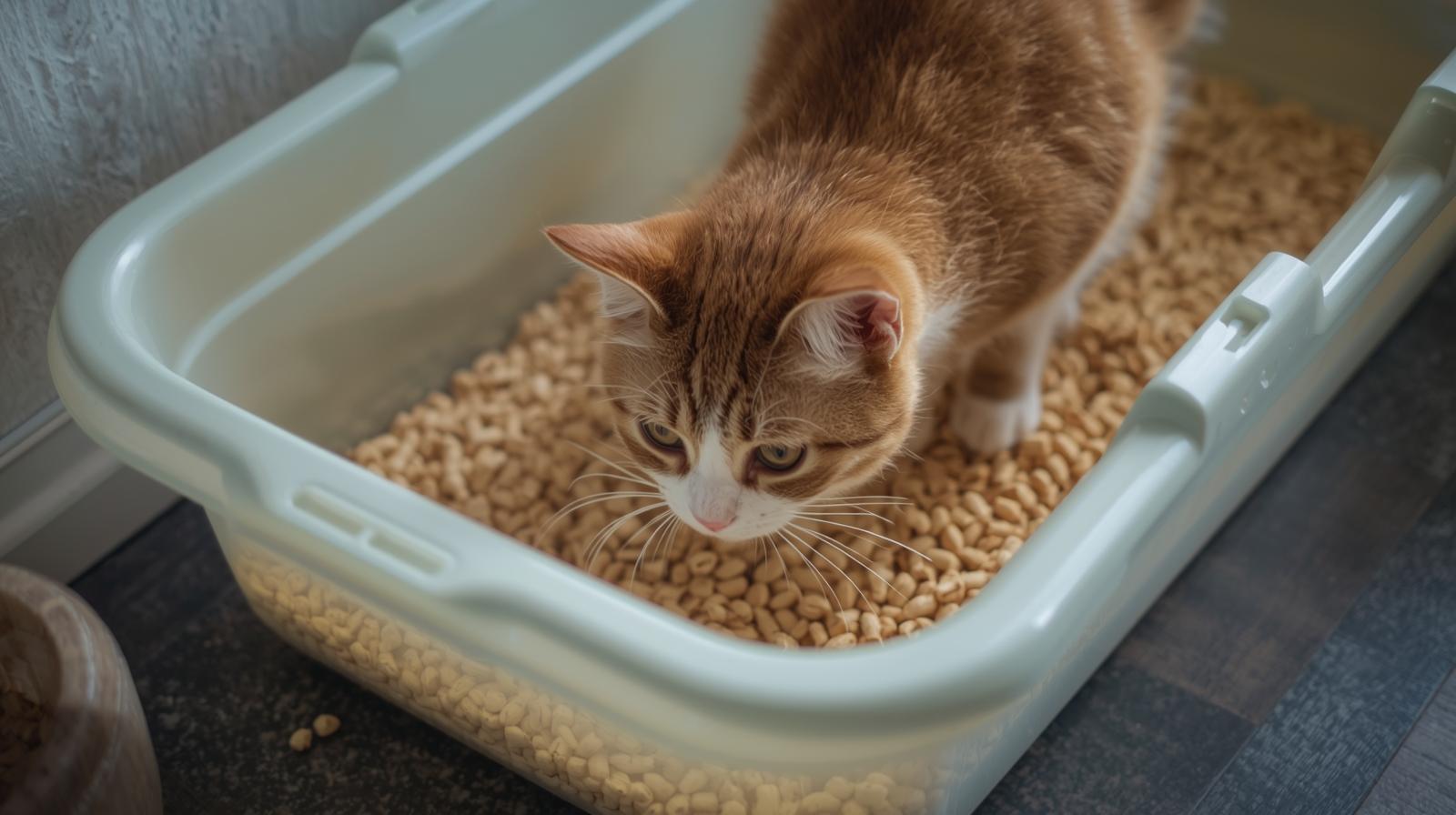
Tofu cat litter has become an increasingly popular alternative to traditional mineral-based cat litter because it is made from plant-based materials and can offer good absorption, clumping performance, low dust, and lightweight handling. Commercial tofu cat litter production, however, involves much more than simply grinding soybean residue and pressing it into pellets. Manufacturers need to control raw material quality, moisture, particle size, formulation, pelletizing, drying, screening, odor control, and packaging throughout the entire process.
For companies planning to enter the pet-care market, understanding how tofu cat litter is manufactured commercially is essential for choosing the right machinery and designing an efficient factory. A professionally engineered customized cat litter production line can be configured according to the raw materials, product specifications, production capacity, factory layout, and target market.
This article provides a comprehensive overview of the commercial tofu cat litter manufacturing process, including raw materials, production steps, equipment, quality control, efficiency improvements, and turnkey factory considerations.
1. What Is Tofu Cat Litter?
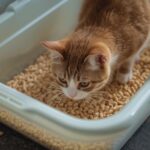
Tofu cat litter is a plant-based cat litter generally produced from soybean-related materials, particularly soybean residue generated during tofu or soy milk processing.
Depending on the formulation, manufacturers may combine soybean residue with other plant-based ingredients such as:
- Corn starch
- Pea fiber
- Cassava starch
- Corn fiber
- Wheat fiber
- Bamboo fiber
- Other agricultural plant materials
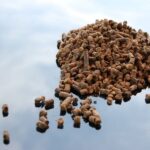
The finished product is commonly formed into small cylindrical or irregular pellets.
Tofu cat litter is generally designed to provide:
- Good liquid absorption
- Clumping performance
- Low dust
- Lightweight handling
- Odor control
- Convenient scooping
The exact characteristics depend heavily on the formulation and manufacturing process.
2. Why Is Tofu Cat Litter Popular?
The popularity of tofu cat litter is closely related to consumer interest in plant-based pet products.
Compared with some traditional mineral litters, tofu litter can offer several potential advantages:
Plant-Based Raw Materials
Soybean residue and other plant fibers can be used as major ingredients.
Lightweight
Many plant-based litters are relatively lightweight, which can make transportation and handling easier.
Absorption
The porous structure of plant fibers can provide effective liquid absorption.
Clumping
With suitable formulation and processing, tofu litter can form stable clumps.
Low Dust
Properly manufactured pellets can provide lower dust levels than poorly processed fine powders.
These advantages make tofu litter an attractive product category for pet-care manufacturers.
3. What Raw Materials Are Used?
Soybean residue is the key raw material in many tofu cat litter formulations.
It may be obtained from:
- Tofu factories
- Soy milk plants
- Soybean processing facilities
However, fresh soybean residue usually contains significant moisture, so it cannot necessarily be sent directly into a pellet mill.
Additional ingredients may include:
- Corn starch
- Cassava starch
- Pea fiber
- Plant fiber
- Natural binders
- Activated carbon
- Odor-control additives
The exact formula should be developed according to the desired product performance.
4. Raw Material Quality Is Important
Commercial production begins with consistent raw materials.
Soybean residue should be evaluated for:
- Moisture
- Fiber content
- Particle size
- Purity
- Odor
- Storage condition
If the material has excessive moisture, it can increase drying costs and make pelletizing unstable.
If it contains too many impurities, additional cleaning equipment may be required.
Raw material consistency is therefore one of the foundations of stable tofu cat litter production.
5. The Commercial Tofu Cat Litter Manufacturing Process
A typical commercial process can be summarized as:
Soybean Residue Receiving → Cleaning → Crushing/Grinding → Drying → Batching → Mixing → Moisture Conditioning → Pelletizing → Drying → Cooling → Screening → Odor Treatment → Packaging
Depending on the formula, some steps may be added or removed.
For example, a manufacturer using already dried soybean residue may require less intensive drying during pretreatment.
A manufacturer using very wet residue may need a larger drying section.
6. Step 1: Soybean Residue Receiving
Fresh soybean residue is delivered to the factory and unloaded into a receiving hopper.
The receiving section may include:
- Hopper
- Conveyor
- Feeder
- Storage bin
The material should be processed quickly when moisture is high.
Proper storage and handling are important because wet biomass can deteriorate if it remains under unsuitable conditions for too long.
7. Step 2: Cleaning
Before further processing, the raw material should be cleaned.
The cleaning system may remove:
- Stones
- Metal
- Plastic
- Packaging fragments
- Other foreign materials
A magnetic separator can remove ferrous metal particles.
A screen can separate oversized materials.
Cleaning helps protect downstream machines and improve product quality.
8. Step 3: Crushing and Grinding
The soybean residue may require size reduction before pelletizing.
A crusher or hammer mill can produce a more uniform material.
Grinding helps improve:
- Mixing
- Pellet formation
- Pellet strength
- Material consistency
However, excessive grinding is unnecessary.
Very fine grinding can increase electricity consumption and dust generation.
The target particle size should be selected according to the formulation and pellet specifications.
9. Step 4: Drying the Soybean Residue
Drying is one of the most important stages in commercial tofu cat litter production.
Fresh soybean residue may contain a high percentage of moisture.
A commercial dryer reduces the moisture to a level suitable for subsequent processing.
Drying systems can include:
- Rotary dryers
- Hot-air systems
- Biomass-fired heating systems
- Gas-fired heating systems
- Other suitable industrial drying technologies
Drying efficiency depends on:
- Initial moisture
- Required final moisture
- Material throughput
- Air temperature
- Residence time
- Dryer design
The dryer should be properly sized because insufficient drying capacity can become a major production bottleneck.
10. Step 5: Batching Ingredients
After drying, the soybean residue can be mixed with other ingredients.
A batching system accurately measures each component.
For example, a formula may contain:
- Soybean residue
- Corn starch
- Plant fiber
- Odor-control additives
- Other functional ingredients
Automatic batching improves formula accuracy and makes it easier to switch between different products.
11. Step 6: Mixing
After batching, the ingredients enter a mixer.
The purpose is to distribute all components evenly.
Uniform mixing is important because the final product needs consistent:
- Absorption
- Clumping
- Density
- Pellet strength
- Odor-control performance
A good mixer should achieve high uniformity within a reasonable mixing time.
Poor mixing can create differences between batches and individual pellets.
12. Step 7: Moisture Conditioning
Before pelletizing, the mixture should have an appropriate moisture level.
If the material is too dry, pellet formation may be unstable.
If it is too wet, the pellets may become soft and require excessive drying.
A moisture-conditioning system can add a controlled amount of water through spray nozzles.
The objective is uniform moisture distribution rather than simply increasing moisture content.
13. Step 8: Pelletizing
The prepared mixture is then fed into a pellet mill.
The pellet mill compresses the material through a die to form continuous cylindrical pellets.
A cutter determines the pellet length.
Pelletizing parameters influence:
- Pellet diameter
- Pellet density
- Durability
- Surface quality
- Absorption speed
The die should be selected according to the required product size.
Different markets may prefer different pellet diameters and lengths.
https://pelletisingmachine.com/cat-litter-pellet-machine
14. Why Pellet Density Matters
Pellet density has a major influence on tofu cat litter performance.
If pellets are too loose, they may:
- Break easily
- Generate more fines
- Create excessive dust
- Have poor transportation durability
If pellets are too dense, liquid penetration may become slower.
Therefore, commercial manufacturers need to balance:
Durability + Absorption + Density + Clumping
The correct combination depends on the intended product.
15. Step 9: Secondary Drying
Fresh pellets may still contain moisture after pelletizing.
A second drying stage can stabilize the product.
The objective is to achieve an appropriate final moisture level while maintaining pellet structure.
Over-drying can waste energy.
Under-drying can lead to:
- Poor storage stability
- Soft pellets
- Moisture migration
- Packaging problems
Automatic temperature monitoring can help stabilize dryer operation.
16. Step 10: Cooling
After drying, tofu cat litter should be cooled.
A counterflow or other suitable cooler can reduce the product temperature before screening and packaging.
Cooling helps:
- Improve storage stability
- Prevent condensation
- Protect packaging
- Reduce product temperature
The cooling system should be matched to the production line capacity.
17. Step 11: Screening
Screening removes particles that do not meet the required specifications.
The screen can separate:
- Qualified pellets
- Fine powder
- Broken pellets
- Oversized particles
Screening is important because commercial consumers expect consistent product size.
Excessive fines can also increase dust and reduce the perceived quality of the product.
Where technically appropriate, suitable fines can be recycled into the manufacturing process.
18. Step 12: Odor Control
Odor control is a major selling point of commercial tofu cat litter.
Manufacturers may incorporate:
- Activated carbon
- Natural odor-control materials
- Suitable plant-based additives
- Other adsorbent ingredients
The product should primarily rely on effective absorption and moisture control rather than simply covering odors with strong fragrances.
Any fragrance or additive should be carefully evaluated for compatibility with the target market and product positioning.
19. Step 13: Packaging
After quality inspection, the finished tofu cat litter enters the packaging section.
A commercial packaging system may include:
- Automatic weighing machine
- Bag filling machine
- Sealing machine
- Date or batch coding system
- Conveyor
Packaging sizes can be customized according to the market.
Common retail formats may include small household bags as well as larger packages for frequent users.
Moisture-resistant packaging is particularly important for plant-based cat litter.
20. Key Quality Indicators of Tofu Cat Litter
Commercial tofu cat litter should be evaluated using several indicators.
Absorption
The litter should absorb urine rapidly.
Clumping
Clumps should form quickly and remain stable during scooping.
Dust
The amount of fine powder should be minimized.
Durability
Pellets should survive transportation and handling.
Particle Size
The finished product should have consistent dimensions.
Moisture
Moisture should be controlled for storage stability.
Odor Control
The litter should provide effective odor management.
Tracking
The product should minimize excessive movement outside the litter box.
21. How to Improve Tofu Cat Litter Absorption
Absorption can be improved through raw material and process optimization.
Manufacturers can adjust:
- Soybean residue content
- Fiber structure
- Pellet density
- Particle size
- Binder level
- Moisture
- Forming pressure
The product should absorb liquid quickly without becoming excessively fragile.
Laboratory testing and practical cat-litter-box testing should both be used.
22. How to Improve Clumping Performance
Clumping performance depends on formulation and pellet structure.
Manufacturers can optimize:
- Starch content
- Binder selection
- Pellet density
- Particle size
- Moisture
- Pelletizing pressure
A good clump should:
- Form quickly.
- Remain intact.
- Hold absorbed liquid.
- Be easy to remove.
- Leave relatively clean surrounding litter.
23. How to Reduce Dust in Tofu Cat Litter
Dust can originate from raw materials, grinding, pelletizing, conveying, and screening.
Manufacturers can reduce dust by:
- Optimizing grinding
- Improving pellet durability
- Controlling pellet density
- Using efficient screening
- Reducing excessive mechanical impact
- Installing dust collectors
A cyclone and baghouse filter can be used in appropriate sections of the plant.
24. How to Improve Production Efficiency
Commercial tofu cat litter manufacturers should optimize the entire production system.
Important measures include:
Stable Raw Materials
Use consistent soybean residue and other ingredients.
Efficient Drying
Control moisture without excessive heat consumption.
Accurate Batching
Reduce formula deviations.
Uniform Mixing
Improve product consistency.
Stable Pelletizing
Maintain constant feeding and moisture.
Efficient Screening
Reduce fines and product loss.
Automated Packaging
Increase final-stage capacity.
Preventive Maintenance
Reduce unexpected downtime.
25. Energy Consumption in Tofu Cat Litter Production
Drying is usually one of the major energy-consuming stages.
Manufacturers can reduce energy consumption by:
- Improving dryer insulation
- Optimizing airflow
- Controlling feed rate
- Recovering heat where practical
- Avoiding excessive drying
- Maintaining burners and fans
- Reducing initial raw material moisture
Electricity consumption should also be monitored in grinding, pelletizing, conveying, and packaging.
Energy consumption per ton of finished product is a useful factory KPI.
26. Equipment Required for Commercial Tofu Cat Litter Production
A commercial production plant may include:
Raw Material Section
- Receiving hopper
- Conveyor
- Storage bins
- Feeder
Pretreatment Section
- Cleaner
- Crusher
- Hammer mill
- Magnetic separator
Drying and Conditioning
- Dryer
- Batching machine
- Mixer
- Moisture-conditioning system
Pelletizing
- Pellet mill
- Forced feeder
- Die
- Roller assembly
Finishing
- Dryer
- Cooler
- Vibrating screen
- Coating machine
Packaging
- Automatic weighing machine
- Bagging machine
- Sealing machine
- Conveyor
Environmental System
- Cyclone
- Dust collector
- Exhaust fan
- Ductwork
The final configuration should be determined according to the raw material and desired capacity.
27. Why a Customized Cat Litter Production Line Is Important
Different tofu cat litter manufacturers may use different raw materials and formulas.
One factory may process fresh soybean residue.
Another may purchase dried soybean fiber.
A third manufacturer may combine soybean residue with corn starch and bamboo fiber.
These differences affect:
- Drying requirements
- Grinding requirements
- Mixing
- Pelletizing
- Cooling
- Screening
- Packaging
Therefore, a standard production line may not always be the best solution.
A customized cat litter production line can be designed according to the customer’s specific raw materials and product requirements.
28. What Can Be Customized?
A commercial production line can be customized in several areas.
Production Capacity
The equipment can be configured according to the desired tons per hour.
Pellet Size
The pellet mill die and screening system can be selected according to product specifications.
Raw Materials
The process can be adapted to different biomass materials.
Automation Level
The plant can range from semi-automatic to highly automated.
Factory Layout
Equipment can be arranged according to the available building.
Packaging
Different bag sizes and packaging methods can be integrated.
29. Designing a Customized Cat Litter Production Line
The design process should begin with raw material analysis.
Engineers should understand:
- Material moisture
- Particle size
- Bulk density
- Fiber content
- Absorption
- Processing behavior
Next, the manufacturer should define:
- Product type
- Capacity
- Pellet diameter
- Product density
- Moisture target
- Packaging format
Based on these parameters, engineers can design the production flow and select suitable machines.
30. Small-Scale Tofu Cat Litter Production
A small factory may use:
Grinding → Mixing → Pelletizing → Drying → Cooling → Screening → Packaging
This configuration may be appropriate when the soybean residue is already relatively dry and clean.
Semi-automatic packaging can reduce initial investment.
However, even a small plant should pay attention to:
- Dust collection
- Moisture control
- Pellet durability
- Product screening
- Worker safety
31. Large-Scale Commercial Production
A large tofu cat litter factory may use:
Automatic Receiving → Cleaning → Crushing → Grinding → Drying → Batching → Mixing → Conditioning → Pelletizing → Drying → Cooling → Screening → Odor Treatment → Packaging → Palletizing
A centralized PLC control system can coordinate the entire line.
This approach can improve:
- Production consistency
- Labor productivity
- Equipment utilization
- Process monitoring
- Product quality
32. Factory Layout for Tofu Cat Litter
A good factory layout should follow the production flow.
The basic sequence is:
Raw Material Area
↓
Pretreatment Area
↓
Drying and Mixing Area
↓
Pelletizing Area
↓
Finishing Area
↓
Packaging Area
↓
Finished Product Warehouse
This arrangement minimizes unnecessary material movement.
The factory should also reserve adequate space for maintenance and spare-parts storage.
33. Automation and Control
Automation can make commercial production more stable.
PLC systems can monitor:
- Material feeding
- Motor operation
- Dryer temperature
- Conveyor operation
- Pellet mill load
- Product flow
Automatic alarms can alert operators when abnormal conditions occur.
Data recording can also help manufacturers analyze production efficiency and energy consumption.
34. Quality Control During Commercial Production
Quality control should begin before the production line starts.
Incoming Material
Check moisture, cleanliness, and material consistency.
During Production
Monitor grinding, mixing, moisture, pelletizing, and drying.
Finished Product
Test:
- Absorption
- Clumping
- Dust
- Moisture
- Particle size
- Durability
- Density
Consistent testing helps ensure that each production batch meets the required specification.
35. Common Problems in Tofu Cat Litter Production
Pellets Are Too Soft
Possible causes include excessive moisture or insufficient compression.
Excessive Dust
Possible causes include poor pellet durability, excessive grinding, or insufficient screening.
Weak Clumping
Possible causes include an unsuitable formula, insufficient binder, or incorrect pellet density.
High Energy Consumption
Possible causes include excessive drying, poor insulation, or inefficient airflow.
Uneven Product Size
Possible causes include unstable pelletizing or ineffective screening.
Each problem should be investigated systematically rather than simply changing one machine setting.
36. Maintenance of Tofu Cat Litter Production Equipment
Regular maintenance is essential for stable commercial production.
Important tasks include:
- Checking pellet mill rollers
- Inspecting dies
- Lubricating bearings
- Cleaning screens
- Checking conveyor belts
- Inspecting dryer components
- Cleaning dust collectors
- Checking motors and electrical systems
Critical wear parts should be stocked in advance to minimize downtime.
37. How to Start a Commercial Tofu Cat Litter Factory
Entrepreneurs can follow several steps.
Step 1: Study the Market
Understand local demand and competing products.
Step 2: Identify Raw Materials
Determine whether soybean residue and other ingredients are locally available.
Step 3: Develop the Formula
Define absorption, clumping, odor-control, and particle-size targets.
Step 4: Determine Capacity
Estimate expected sales and future expansion.
Step 5: Conduct Raw Material Testing
Test the actual materials that will be used.
Step 6: Design the Production Line
Select equipment based on test results.
Step 7: Plan the Factory
Design material flow, storage, production, packaging, and utilities.
Step 8: Install and Commission
Complete equipment installation and test the system.
Step 9: Train Operators
Provide training in production and maintenance.
Step 10: Begin Commercial Production
Start with controlled production and gradually optimize the process.
38. RICHI Customized Cat Litter Production Line
RICHI Machinery Manufacture can provide customized solutions for customers planning to establish commercial tofu cat litter production facilities.
A customized cat litter production line can be designed according to:
- Soybean residue characteristics
- Other biomass ingredients
- Production capacity
- Pellet size
- Product formulation
- Moisture requirements
- Factory layout
- Automation level
- Packaging requirements
A typical line can include:
Raw Material Receiving → Cleaning → Crushing → Grinding → Drying → Batching → Mixing → Moisture Conditioning → Pelletizing → Drying → Cooling → Screening → Odor Treatment → Packaging
RICHI can provide integrated services covering process design, equipment manufacturing, factory layout planning, transportation and customs clearance, installation and commissioning, operator training, spare-parts supply, and long-term technical support.
This customized approach allows the production system to be matched with the customer’s actual raw materials and commercial objectives instead of relying on a one-size-fits-all configuration.
39. How to Improve Commercial Profitability
Profitability depends on both product value and manufacturing cost.
Manufacturers can improve profitability by:
- Purchasing local raw materials
- Reducing drying costs
- Improving production yield
- Reducing fines
- Optimizing labor
- Automating packaging
- Reducing downtime
- Improving product quality
- Developing multiple product grades
A premium tofu cat litter product may justify a higher selling price if it provides strong absorption, reliable clumping, low dust, and effective odor control.
40. Future Development of Tofu Cat Litter
The tofu cat litter market may continue to evolve toward more specialized products.
Potential product directions include:
- Low-dust tofu litter
- Fast-clumping tofu litter
- High-absorption formulas
- Lightweight products
- Odor-control products
- Mixed plant-fiber litter
- Customized particle sizes
Manufacturers that can rapidly adjust their formulas and production parameters may have an advantage in responding to changing consumer demand.
Conclusion
Commercial tofu cat litter manufacturing is a systematic process that combines raw material preparation, formulation, grinding, drying, mixing, moisture conditioning, pelletizing, secondary drying, cooling, screening, odor treatment, and packaging.
The process can be summarized as:
Soybean Residue → Cleaning → Crushing → Grinding → Drying → Batching → Mixing → Moisture Conditioning → Pelletizing → Drying → Cooling → Screening → Odor Treatment → Packaging
Each stage has an important influence on the final product. Moisture affects pellet formation and drying efficiency, grinding influences material consistency, pelletizing determines density and durability, screening controls particle size, and formulation determines absorption and clumping performance.
For commercial manufacturers, selecting the right equipment is only part of the project. The complete production system must be properly matched and organized. A customized cat litter production line can be designed around specific soybean residue characteristics, production capacity, product specifications, factory layout, automation requirements, and packaging needs.
RICHI provides customized cat litter production solutions covering process design, equipment manufacturing, installation, commissioning, operator training, and long-term technical support. By integrating the entire production process into one coordinated system, manufacturers can improve production efficiency, reduce unnecessary material losses, maintain stable product quality, and build a scalable tofu cat litter manufacturing business.
Ultimately, successful tofu cat litter production depends on consistent raw materials, accurate formulation, precise moisture control, suitable pelletizing technology, efficient drying, effective screening, and reliable automation. With the right process and a properly designed production line, soybean residue and other plant-based materials can be transformed into a commercially competitive cat litter product with strong absorption, good clumping performance, low dust, and consistent quality.