



Global feed production reached 1.44 billion tons in 2025, a 2.9% increase over the previous year. Alltech’s Agri-Food Outlook, compiled from data covering 38,837 feed mills across 142 countries, shows that almost every region expanded output. Africa recorded the strongest growth at 11.5%, reaching 64.25 million tons. Asia remains the largest producer at 559 million tons, up 5.0%. North America was the only region to decline, with a 0.7% drop to 288 million tons.
These numbers tell a bigger story than simple volume growth. They reveal where investment is flowing, which species are driving demand, and what kind of feed processing infrastructure will be needed over the next decade. For anyone planning a new feed plant or expanding an existing one, understanding these regional and species-level shifts is more useful than watching a single commodity price chart.
Where the Growth Is Coming From
The geographic pattern matters because it shapes equipment demand, project scale, and raw material strategy. Africa’s 11.5% jump is not a one-year anomaly. Commercialization and rising compound feed penetration have been building for several years. Egypt, in particular, has emerged as a major driver. Poultry feed production in Egypt grew 21.9%, and aquaculture feed demand rose about 36%.
Asia’s growth is more mature but still substantial. The region added roughly 27 million tons of feed in a single year. Much of that came from South Asia. Nepal’s broiler feed output jumped 28.5%, while Sri Lanka grew 14.9%. Thailand’s pig feed production rose 9.2%. These are not marginal movements. They represent real capital investment in feed mills, storage, and distribution.
North America’s decline is less about weak demand and more about structural changes. Fewer cattle and a drop in egg-layer feed production due to avian influenza pulled total output down. But the region still produces 288 million tons, and its feed mills are among the most automated in the world. The investment focus there is on efficiency upgrades rather than greenfield capacity.
Species-Level Demand Signals
Feed production growth is not uniform across animal species. Understanding which segments are expanding helps plant owners decide where to place their capacity bets.
Aquaculture feed grew 4.7% globally, the fastest among all species. Africa led with a 27.5% increase, followed by Latin America at 11.4%. Ecuador’s shrimp production rebounded about 15%, Chile’s salmon output rose 8%, and Brazil expanded tilapia farming. Asia, the largest aquaculture feed region, still grew 2.4%.
Poultry feed remains the largest category. Broiler feed reached 400 million tons, up 3.7%. Layer feed hit 180 million tons, up 3.2%. The poultry sector’s relatively short production cycle makes it more responsive to feed cost changes, so demand tends to recover faster after price shocks.
Ruminant feed, including dairy and beef, showed slower growth. Dairy feed rose 2.6% to 170 million tons, while beef feed grew just 0.5%. The dairy segment’s stability reflects steady consumer demand and favorable milk prices in several regions. Beef feed is more sensitive to pasture conditions and herd cycles.
What This Means for Plant Capacity Planning
The species mix in a region should determine the type of feed line a plant installs. A mill serving the poultry sector needs different equipment than one focused on aquaculture or ruminants. Poultry feed is generally simpler to pelletize, with well-established formulas and high throughput requirements. Aquaculture feed demands tighter control over water stability, particle size, and binding. Ruminant feed often uses more fibrous ingredients and may require different conditioning parameters.
Investors who plan capacity based on total regional feed output without considering species mix often end up with equipment that is either underutilized or mismatched to local demand. A plant designed for 10 tons per hour of poultry feed may not perform well if the actual market requires shrimp feed with strict water stability requirements. The equipment selection must follow the product definition, not the other way around.
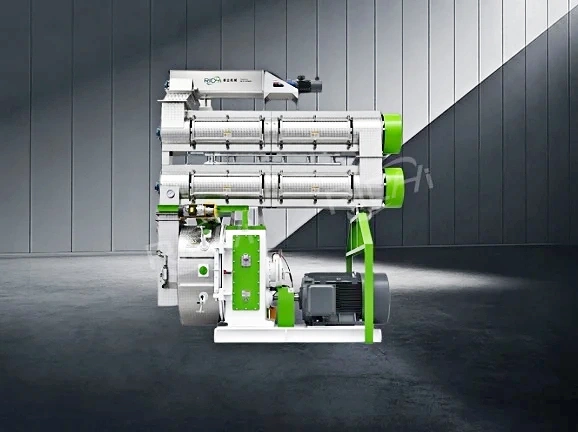
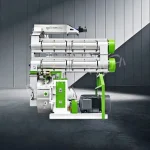
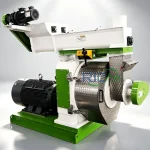
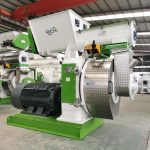
For projects that need to cover multiple species, a ring die pellet mill can offer flexibility across different feed types. The die and roller configuration can be adjusted for different pellet sizes and formulas. But flexibility has limits. A plant that tries to produce everything for everyone often produces nothing particularly well. It is better to define the primary product and design around it, then add secondary capabilities as the market develops.
Raw Material Sourcing Under Pressure
Feed producers in every region face the same fundamental challenge: raw materials represent the largest share of production cost. Industry data consistently shows that raw materials account for roughly 70% of feed production expenses. In some markets, corn alone represents about half of that cost, with soybean meal adding another significant portion.
The sourcing strategy varies dramatically by region. European feed mills tend to secure longer-term contracts and rely more heavily on locally available wheat. Moroccan mills, by contrast, have shifted toward spot purchases and formulas based on imported corn. Alf Sahel, Morocco’s largest feed mill, changed from buying forward three to eight months in advance to a hand-to-mouth spot approach after price volatility made long-term contracts risky.
These differences are not just commercial preferences. They reflect deeper structural realities. A mill in a wheat-growing region can buy weekly from local farmers. A mill in a corn-importing country must manage shipping schedules, currency exposure, and port logistics. The equipment and storage capacity needed for each situation are different.
The African Feed Market: Opportunity and Constraint
Africa’s 11.5% growth rate is impressive, but it comes from a relatively low base. The continent produces 64.25 million tons of feed, compared to Asia’s 559 million tons. The growth is driven by urbanization, rising demand for animal protein, and the expansion of commercial farming.
This growth creates demand for feed processing equipment, but it also exposes infrastructure gaps. Many African feed projects struggle with reliable power supply, limited steam availability, and inconsistent raw material quality. A plant designed for European conditions may not function well in a region where grid electricity fluctuates and local ingredients vary from batch to batch.
The CGIAR’s SAPLING initiative launched feed processing units in Mali with a capacity of 500 kg per hour, using locally available ingredients like cotton cake and cereal residues. These units were co-designed with farmer organizations and locally produced. The approach reflects a practical reality: in many African markets, small-scale, locally adapted feed production is more viable than large centralized plants.
For investors considering African projects, this suggests that capacity should match the actual supply chain. A 1-5 ton per hour line using local ingredients may be more profitable than a 20 ton per hour plant that cannot secure consistent raw material supply. The equipment must be robust, simple to maintain, and adaptable to variable inputs.
Asia’s Scale and the Efficiency Imperative
Asia’s feed industry is the world’s largest and most competitive. With 559 million tons of annual production and growth across nearly every species category, the region’s feed mills are under constant pressure to reduce cost per ton. This is where equipment selection and process optimization become critical.
In high-volume markets, even small efficiency gains translate into significant savings. Reducing pellet fines by 1% in a 10 ton per hour plant saves 100 kg per hour of saleable product. Improving feed conversion by a single percentage point can raise farm profitability by 8-12%, according to industry data from China’s feed sector.
These economics drive investment in better grinding, more precise batching, improved conditioning, and tighter cooling control. The pellet mill itself is only one part of the equation. A plant with a high-quality pellet mill but poor steam supply or inadequate cooling will underperform. In Asia’s competitive environment, the whole line must be optimized.
Why Project Planning Starts with the Market, Not the Machine
One of the most common mistakes in feed plant investment is starting with equipment selection instead of market analysis. An investor sees a 1-100t/h ring die feed pellet machine supplier listing online and begins comparing motor power and die diameters before defining what the plant will actually produce.
This is backwards. The first questions should be: What species will this plant serve? What is the local demand volume? What raw materials are available and at what cost? What is the target selling price? What level of feed quality does the market require? Only after these questions are answered does equipment selection become meaningful.
A plant designed for 2 tons per hour of shrimp feed has very different requirements from one designed for 20 tons per hour of broiler feed. The former needs precise control over particle size, water stability, and cooling. The latter needs high throughput, reliable uptime, and efficient energy use. Both may use ring die technology, but the configuration and supporting equipment differ substantially.
If you are evaluating options for a feed granulation project, https://pelletmakermachine.com/feed-pellet-granulator/ provides a reference point for the equipment categories involved. But the page should be the starting point for a deeper conversation, not the final decision.
Supplier Selection and Manufacturing Background
Equipment suppliers can be found online, but not all suppliers understand feed production. A good partner should ask about the target species, formula, raw materials, and local conditions. They should be able to explain the process, not just quote a machine. They should provide drawings, utility requirements, and training recommendations.
Some buyers begin by reviewing the background of Richi Pellet Mill before requesting a layout or quotation. This is a reasonable first step, but the evaluation should not stop there. Ask how the supplier handles test runs, spare parts, and commissioning. Ask what information they need from you. A supplier who asks detailed questions is often more serious than one who sends a price immediately.
It also helps to visit a running plant if possible. Seeing a similar project in operation can reveal practical issues that are not visible in a catalog. How is the material fed? How often is the die changed? How is steam controlled? How are fines handled? These details matter more than glossy photos.
Energy, Maintenance, and the Real Cost of Ownership
Feed mill operating costs extend well beyond raw materials. Energy consumption for grinding, pelleting, cooling, and conveying adds up quickly. Steam generation alone can represent a significant portion of variable cost, especially in regions where fuel prices are high.
Maintenance is another underappreciated cost driver. Ring dies and rollers wear out. Bearings fail. Steam traps malfunction. Conveyors misalign. A plant that does not plan for spare parts and skilled maintenance will experience more downtime and higher repair costs. In some cases, the cost of poor maintenance exceeds the original equipment purchase price over a five-year period.
The most effective approach is to treat maintenance as a production function, not an afterthought. Scheduled inspections, operator training, and spare parts inventory reduce unplanned stops. A mill that runs 20 hours per day at 95% uptime produces far more than one that runs at 70% uptime because of repeated breakdowns.
Feed Safety and Regulatory Pressure
The FAO has highlighted that contaminants such as mycotoxins, microplastics, and chemical residues can harm animal and human health and disrupt international trade. Many countries still lack comprehensive feed legislation aligned with Codex Alimentarius standards. This creates both risk and opportunity for feed producers.
In markets with strong regulation, compliance is a cost of entry. Testing, traceability, and documentation add expense but also build customer trust. In markets with weaker regulation, the risk is that contaminated or substandard feed reaches the market and damages the entire industry’s reputation.
Cargill’s 2025 mycotoxin report found that 71% of feed samples globally showed contamination risk. This is not a marginal issue. It affects livestock performance, feed conversion, and ultimately the cost of animal protein production. Feed mills that invest in incoming material testing and storage management reduce their exposure to these risks.
The Shift Toward Alternative Proteins
Protein sources are the most expensive and most scrutinized part of feed formulation. Fishmeal is increasingly scarce and expensive. Soybean meal prices follow global commodity markets. This has driven interest in alternative proteins including insect meal, single-cell protein, and fermented plant proteins.
China’s 2025 grain-saving action plan offers subsidies of 500 yuan per ton to farms using insect protein, with replacement rates of 5-15% in pig and poultry feed. Black soldier fly and mealworm protein are the primary candidates. Agricultural by-products like straw and potato residue can replace 10-20% of corn and soybean meal when processed through biological fermentation, reducing raw material cost by 8-12%.
These alternatives change the pelleting process. Insect meal has different binding characteristics than fishmeal. Fermented ingredients may have higher moisture content. A feed mill that intends to use alternative proteins must be prepared to adjust grinding, conditioning, and die selection. The equipment must be flexible enough to handle formula changes without major modification.
Automation and Data in Modern Feed Mills
Feed mills are becoming more data-driven. PLC control systems manage batching, mixing, and pelleting parameters. Sensors monitor temperature, moisture, motor load, and pellet quality. Data logging supports traceability and continuous improvement.
But automation is not a solution by itself. A sensor that reports high motor load does not tell the operator whether the die is worn or the formula has changed. A moisture reading does not decide how much steam to add. The value of automation comes from how well the data is used. Mills that combine automation with trained operators and systematic record-keeping get the best results.
In practical terms, the level of automation should match the plant’s scale and the local labor market. A small plant in a region with affordable skilled labor may benefit more from simple, reliable manual controls than from a complex automated system that no one can maintain. A large plant in a high-wage country needs automation to stay competitive.
Storage and Logistics as Hidden Cost Centers
Feed quality can be excellent when it leaves the pellet mill and poor when it reaches the animal. Storage and transport are often overlooked but have significant impact on cost and performance.
Moisture migration in bags, pest damage, and dust loss during loading all reduce the amount of usable feed. Industry analysis of feed milling operations identifies ingredient spills, batching errors, loadout losses, and equipment wear as major sources of shrink — the physical loss of material between purchase and sale. In grinding operations alone, 1-2% moisture loss is common. Bagged products face additional losses from dust, pests, and bag damage.
A feed mill that tracks and controls these losses can recover several percentage points of margin. Simple measures like proper pallet stacking, pest control, and loading procedures often pay for themselves quickly.
What Investors Should Ask Before Committing
Before signing an equipment contract, project developers should be able to answer several questions clearly:
- What species and volume will the plant serve in the first two years?
- What raw materials are reliably available within economic transport distance?
- What is the expected feed conversion and water stability requirement?
- How will steam be supplied and at what cost?
- What level of automation can the available workforce operate and maintain?
- What is the plan for spare parts, maintenance, and operator training?
- How will finished feed be stored and distributed?
If any of these questions cannot be answered, the project is not ready for equipment selection. A supplier who pushes a specific machine before understanding these factors is not providing good service.
Conclusion
Global feed production is growing, but the growth is uneven across regions and species. Africa and Asia are driving volume increases. Aquaculture and poultry are the fastest-expanding segments. Raw material costs remain the dominant factor in plant economics, and alternative proteins are beginning to change formulation strategies.
For anyone planning a feed plant, the lesson is clear: start with the market, define the product, and then select the equipment. The machine is important, but it is only one part of a system that includes raw material sourcing, process control, maintenance, storage, and distribution. A plant that gets these elements right can compete in almost any market. A plant that focuses only on the equipment will struggle regardless of how modern the pellet mill is.