
Walk into any poultry barn, and you’ll see two things in abundance: chickens and their waste. The birds are your livelihood—meat, eggs, or both. The manure? That’s just a problem you’ve learned to live with. You haul it out, spread it on fields when you can, and pay someone to take it when you can’t. It smells, it attracts flies, and it never seems to stop accumulating.
But here’s a question that might change how you see that pile: what if the manure from one bird was worth more over its lifetime than the eggs it lays or the meat it produces? It sounds absurd. Yet for a growing number of poultry farmers, that’s exactly what’s happening. The waste they used to pay to remove has become a revenue stream that rivals—and in some cases exceeds—their primary products.
The Manure Math That Changes Everything
Let’s run the numbers. A typical laying hen produces about 100 pounds of manure per year. At current prices for processed organic fertilizer, that manure—if properly handled and marketed—can generate $15 to $25 in annual revenue per bird. That’s not pocket change. For a 10,000-bird operation, we’re talking about $150,000 to $250,000 per year from manure alone.
The catch, of course, is that manure doesn’t come out of the bird as fertilizer. It comes out as a wet, smelly, biologically active material that needs processing before it has market value. The processing adds cost, but it also adds value. Farmers who invest in the right equipment consistently report that the processed pellets sell for far more than the cost of production. The margin is where the opportunity lies.
Why Chicken Manure Stands Out
Poultry manure is different from other livestock waste. It’s more concentrated in nutrients—higher in nitrogen, phosphorus, and potassium than cattle or pig manure. It also dries more readily because of its lower initial moisture content. These characteristics make it particularly well-suited for processing into fertilizer.
But chicken manure has its challenges too. It’s acidic, which can corrode equipment over time. The silica content from feed and bedding material adds abrasiveness. And the ammonia released during processing can be unpleasant for workers if the system isn’t properly ventilated.
The farmers who succeed with processing are the ones who choose equipment designed for these specific conditions. General-purpose pellet mills often struggle with poultry manure—they wear out too quickly, clog too often, and produce inconsistent results. The investment has to be made in machinery that’s built for this particular job.
The Journey from Mess to Market
Transforming raw chicken manure into marketable pellets involves a multi-step process. It’s not complicated, but every step matters.
The first challenge is moisture. Fresh poultry manure typically contains 25% to 35% water. For effective pelleting, that needs to come down to roughly 12% to 15%. This drying step is often the most expensive part of the operation, requiring either sun drying (cheap but weather-dependent) or mechanical drying (faster but energy-intensive).
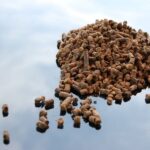
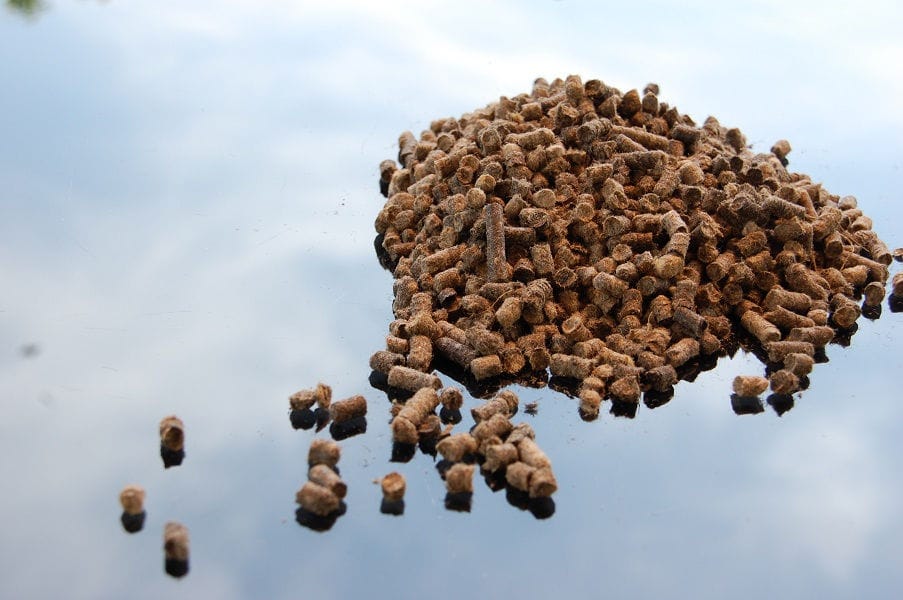
Once the manure is dry enough, it’s ground to a consistent particle size. This creates a uniform material that flows smoothly through the pellet machine and produces pellets of consistent quality. Then comes the actual pelleting, where the dried, ground material is compressed into dense little cylinders that are easy to handle, store, and apply.
The pellets are then cooled and screened. Cooling hardens them for storage and transportation. Screening removes the fines and broken pieces, which are recycled back into the process. What comes out at the end is a clean, uniform product that smells more like soil than manure.
The Machine That Makes It Possible
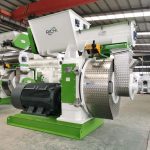
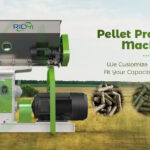
At the heart of this transformation is a chicken manure pellets machine. These machines are not your standard pellet mills. They’re engineered specifically for the demanding characteristics of poultry waste. The alloy composition of the dies and rollers is different, designed to resist the acidic corrosion and abrasive silica that would destroy standard components. The feeding mechanism is reinforced to handle the fibrous material that often accompanies manure—feathers, bedding, and coarse particles.
A properly designed chicken manure pellets machine will run for thousands of hours with minimal maintenance. It will produce pellets with consistent density and durability, which translates to higher prices from buyers who want reliable quality. And it will handle the variations in moisture and composition that inevitably occur from one batch of manure to the next.
When One Size Doesn’t Fit All
Every poultry operation is different. A small free-range farm with 500 birds has very different needs from a commercial operation with 100,000 birds. The equipment that works for one won’t work for the other.
For smaller operations, a compact unit that processes a few hundred kilograms per hour is the right scale. These machines are affordable, run on standard electricity, and fit in a modest building. The payback period is longer, but the investment is smaller, making it accessible to farmers who want to start small and grow gradually.
For larger operations, the scale is entirely different. The equipment must process tons of material per hour to keep up with the waste stream. These machines are industrial-grade, with heavy-duty motors, automated controls, and integrated drying and screening systems. The investment is substantial, but the return is correspondingly larger.
This is why a customized poultry manure pellet machine is often the best solution. A one-size-fits-all approach doesn’t work when the feedstocks, volumes, and markets vary so widely. A customized machine is designed around your specific operation—your flock size, your manure collection system, your available drying capacity, and your target customers.
The customization process typically starts with an assessment of your manure characteristics. Moisture content, particle size distribution, nutrient profile, and bedding composition all influence the design. The machine is then configured with the appropriate die size, roller configuration, and feeder type to match your specific material. The result is higher efficiency, lower operating costs, and better pellet quality.
A Success Story from the Field
A turkey operation in the American Midwest had been struggling with manure disposal for years. They raised about 40,000 birds annually, and the waste was constant. They spread what they could on their own farmland, but that wasn’t enough. They were paying a commercial hauler to remove about half their annual manure production—a cost that was eating into their margins.
When they began investigating processing options, they were skeptical. They’d seen other farmers try and fail with poor-quality equipment. They’d heard horror stories about maintenance costs and unreliable output. But they’d also seen neighbors making it work, and they knew the economics were compelling.
They started by testing their manure to understand its composition and variability. They visited other operations that had installed processing systems, asked detailed questions, and took careful notes. They finally chose a Richi Pelletizer unit configured specifically for poultry manure. The customization included a corrosion-resistant alloy in the die, a reinforced feeder for handling bedding material, and a control system that adjusted for moisture variations.
The results transformed their operation. They eliminated disposal costs entirely and now sell the processed pellets to organic vegetable farmers in their region. The revenue from pellet sales covers their equipment costs and then some. The operation is more sustainable, their environmental compliance issues are resolved, and they’ve added a reliable second income stream.
What the Manufacturer Brings
A pellet machine is only as good as the engineering behind it. Poultry manure is one of the most challenging materials to process, and it takes a manufacturer with deep experience to build equipment that performs reliably in these conditions.
Richi Pelletizer has focused on this niche for years. Their machines are built with heavy-duty frames, precision-machined dies, and bearings that can handle continuous operation under heavy loads. But the engineering is only part of the story. They also bring a deep understanding of poultry manure characteristics across different production systems.
Their approach to customization includes analyzing your specific manure composition, recommending the optimal die specifications, and configuring the machine to integrate with your existing equipment. They provide installation support and training to get you up and running quickly. And they offer ongoing technical assistance to help you maintain consistent production.
view more:https://pelletizerextruder.com/poultry-manure-pellet-machine/
Beyond Fertilizer: Other Markets
While fertilizer is the largest market for processed poultry manure, it’s not the only one. Some farmers are exploring biomass fuel applications. Poultry manure pellets burn cleanly and have a calorific value that makes them suitable for industrial boilers, greenhouse heating, and even residential pellet stoves in some regions.
The fuel market is attractive because it’s generally less seasonal than fertilizer demand. Fertilizer sales peak during planting seasons; fuel sales continue year-round. Diversifying into fuel can smooth out cash flow and provide more stability to the business.
There are also emerging markets for poultry manure pellets in the pet industry and as a component in soil remediation products. These are smaller markets, but they often pay premium prices for material that meets specific quality standards.
The Financial Picture
The decision to invest in manure processing equipment should be evaluated like any other business investment. The costs are real, but so are the returns.
The equipment cost for a full processing line varies widely based on capacity and sophistication. A small unit with a few hundred kilograms per hour might cost $20,000 to $40,000. An industrial line with several tons per hour can exceed $200,000. The lower end is accessible to many farmers; the higher end requires serious financing.
The operating costs include electricity, labor, and maintenance. These typically run $30 to $60 per ton of finished pellets. The sales price for organic fertilizer pellets ranges from $200 to $400 per ton, depending on quality and location. The margin is substantial.
The payback period ranges from one to three years for most operations. This is attractive compared to many other agricultural investments, and it comes with the added benefit of solving a disposal problem that isn’t going away.
The Environmental Dividend
Beyond the financial returns, manure processing delivers real environmental benefits. Raw manure stored in open piles emits methane and ammonia. Processed and applied properly, it releases nutrients slowly and reduces runoff into waterways. The reduction in hauling trucks also cuts fuel consumption and emissions.
For farmers under regulatory pressure to reduce their environmental footprint, a processing system can be part of a compliance strategy. In some regions, the investment qualifies for grants or subsidies that reduce the effective cost of the equipment. It’s worth investigating what programs are available in your area.
Making It Work for You
The success stories are real, but they don’t happen by accident. Farmers who succeed in manure processing share several traits.
They take time to understand their raw material. They test their manure for nutrient content and moisture, and they track how it changes through the seasons. This knowledge informs their processing approach and helps them maintain consistent quality.
They invest in quality equipment. They don’t choose the cheapest option, knowing that downtime and poor output cost more in the long run. They look for equipment built for their specific application.
They build relationships with buyers. Fertilizer is a commodity, but consistent quality and reliable supply command better prices. They establish long-term relationships with organic farmers, garden centers, and other customers.
They start at the right scale. They don’t over-invest before proving the model, and they don’t under-invest to the point where they can’t produce a marketable product.
The Takeaway
Poultry manure is not going away. Every bird produces it every day. The question is what you do with it. You can continue paying to dispose of it, or you can process it into a product that generates real income.
The technology is proven. The equipment is available. The markets are growing. And the first step is understanding that the pile behind your barn is not a waste problem—it’s an opportunity waiting to be processed.


