


Cow manure is one of the most common organic residues generated by cattle farming. Instead of treating it only as waste, many farms and agricultural businesses are exploring ways to process it into a more convenient organic fertilizer product.
Pelletizing is one possible approach. By processing manure into compact particles, producers can make the material easier to handle, transport, store, and apply to farmland. However, producing stable fertilizer pellets involves more than simply pressing fresh manure through a pellet mill.
Moisture, fermentation, particle size, nutrient content, organic matter, pellet diameter, and drying conditions all influence the final product. The processing method also depends on whether the manure is used alone or mixed with other organic materials.
This article explains the main stages involved in converting cow manure into fertilizer pellets and discusses the practical questions that should be considered when planning a processing project.
Why Turn Cow Manure Into Organic Fertilizer?
Fresh cow manure contains organic matter and plant nutrients, which makes it a potentially useful agricultural resource.
However, fresh manure is difficult to transport and apply uniformly. Its high moisture content means that a large proportion of the material being transported may consist of water.
It can also have an unpleasant odor and may attract flies if it is not properly managed.
Processing changes the physical characteristics of the material.
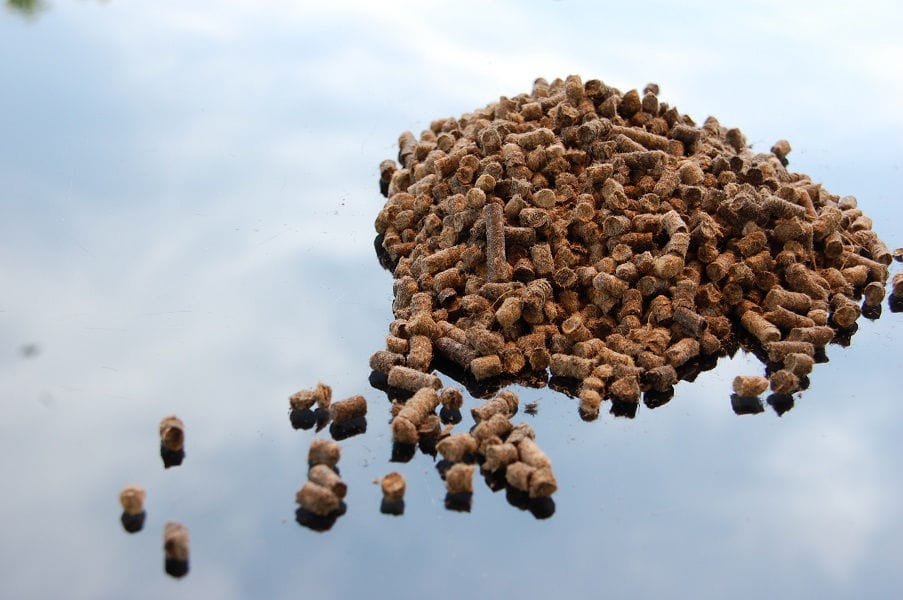
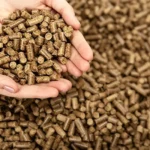
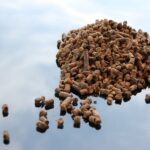
After appropriate fermentation, drying, and pelletizing, manure can become a more concentrated and convenient organic fertilizer product. Pellets can be packaged, transported, stored, and applied using relatively simple equipment.
The main benefit of pelletizing is therefore not necessarily that it changes the basic nutrient composition of manure. Instead, it improves handling and creates a more standardized physical form.
Can Fresh Cow Manure Be Used Directly?
Fresh manure is generally not the ideal material for immediate pelletizing.
It usually contains too much moisture, and its physical structure is not sufficiently stable for efficient mechanical pellet formation.
Fresh manure can also contain partially decomposed organic matter. If it is pelletized too early, biological activity may continue inside the finished product, potentially causing heating, odor, or storage problems.
For fertilizer production, a period of composting or fermentation is often used before pelletizing.
During this stage, microorganisms break down part of the organic material and the manure becomes more stable.
The exact processing time depends on manure composition, environmental conditions, moisture, aeration, and the fermentation method used.
What Happens During Composting?
Composting is essentially a controlled biological decomposition process.
Microorganisms consume biodegradable organic matter and generate heat. As the process continues, the material gradually becomes more stable.
Aeration is important because microorganisms require oxygen for effective aerobic composting.
Moisture also needs to be controlled. Material that is excessively wet can restrict airflow, while overly dry material may slow microbial activity.
Regular turning or mechanical mixing can improve aeration and help create a more uniform composting environment.
The goal is to produce a relatively stable organic material that can be further processed into fertilizer.
The composting stage is therefore an important part of the overall fertilizer-production process rather than simply a storage step.
Related Post: https://commercialpelletmill.com/compost-pellet-machine/
How Does Moisture Affect Fertilizer Pellet Production?
Moisture is one of the most important physical factors in manure pellet production.
Fresh cow manure can contain a large amount of water, while properly composted material usually has a lower and more manageable moisture level.
If the material entering the pellet mill is too wet, it may stick to internal components and fail to form durable pellets.
If it is excessively dry, the particles may not bind effectively.
The appropriate moisture condition depends on the material, pellet mill, formulation, and production method.
For commercial production, moisture should ideally be measured rather than estimated by appearance alone.
Moisture control also becomes important after pelletizing because excessive residual moisture can affect storage stability.
Should Other Organic Materials Be Added?
Cow manure does not always need to be pelletized by itself.
Other organic materials can be added depending on the desired fertilizer characteristics and locally available resources.
Possible materials include crop residues, straw, rice husks, sawdust, poultry manure, composted plant materials, or other suitable organic resources.
Adding dry materials can help adjust moisture and improve physical structure.
However, the materials should be evaluated carefully. Some agricultural residues contain high levels of lignocellulose and may require additional grinding.
Other materials can change the nutrient content or pH of the finished fertilizer.
The formulation should therefore be based on the intended product rather than simply adding as many materials as possible.
What Is the Basic Production Process?
A typical manure fertilizer pellet process can contain several stages.
First, manure is collected and transported to the processing area.
Second, unsuitable foreign materials are removed.
Third, the manure is composted or fermented to stabilize the organic matter.
Fourth, the composted material is dried or conditioned to reach an appropriate moisture level.
Fifth, the material may be crushed or screened to improve particle uniformity.
Sixth, additional organic or mineral ingredients can be mixed into the material if required.
Seventh, the prepared material is pelletized.
Finally, the pellets are cooled, screened, stored, and packed.
The exact process varies from project to project, but the overall principle is to convert wet and unstable organic waste into a stable, uniform, and manageable fertilizer product.
What Does a Cow Manure Processing Flow Look Like?
Understanding the process sequence helps when evaluating equipment.
A typical cow dung plant process flow can begin with raw-material receiving and temporary storage. The manure then enters the composting section, where biological decomposition takes place.
After composting, the material may pass through a crushing or screening stage before entering the fertilizer pelletizing system.
Depending on moisture content, a dryer may be installed before pelletizing. If additional materials are included, a mixing system can ensure that the formulation is relatively uniform.
The prepared material is then compressed into pellets, cooled, screened, and transferred to finished-product storage.
This process flow can be simplified for small farms or expanded for commercial production.
The important point is that every stage should support the next stage rather than being designed independently.
How Does a Fertilizer Pellet Machine Work?
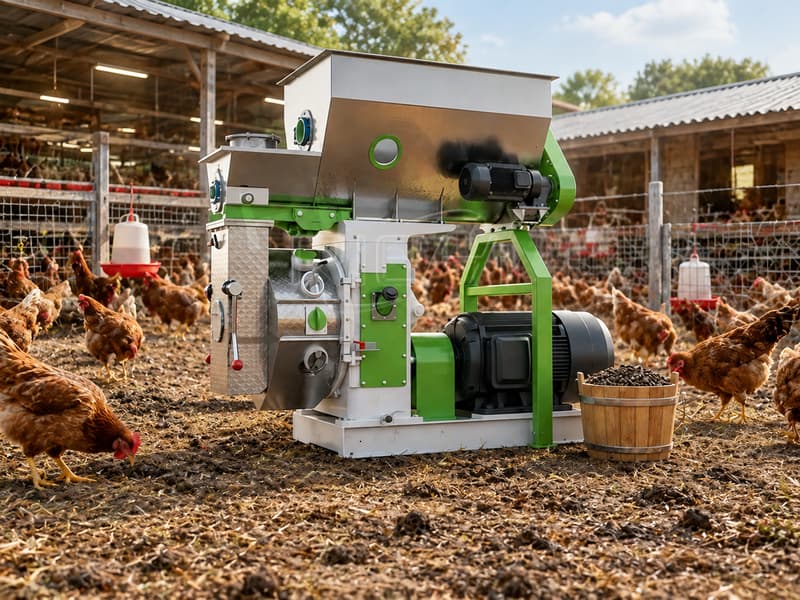
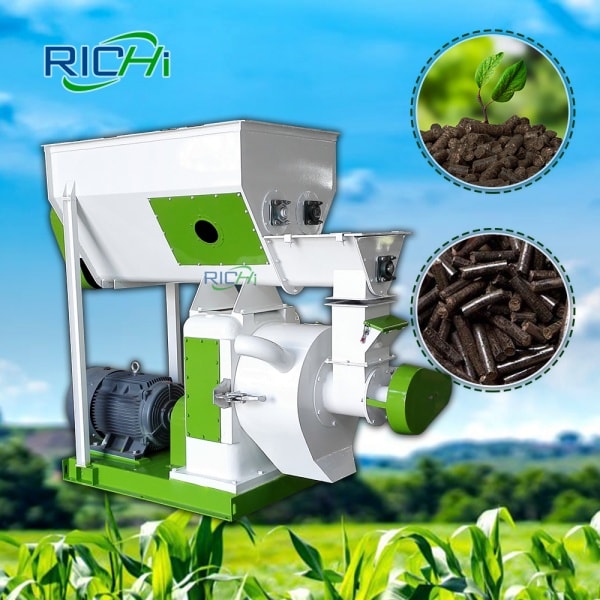
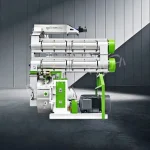
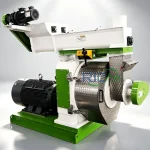
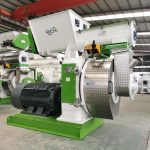
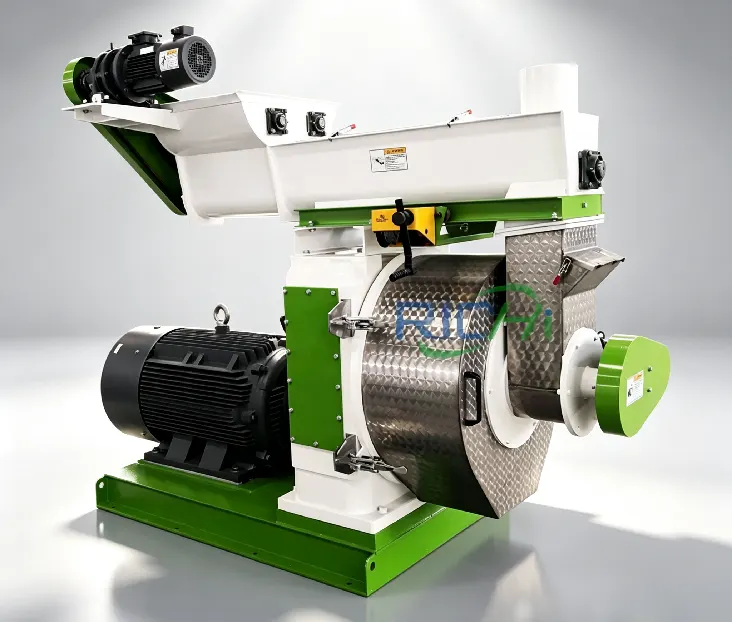
A fertilizer pellet mill uses mechanical pressure to compress prepared organic material into cylindrical particles.
The material enters the pelletizing chamber, where rollers apply pressure against a perforated die.
The compressed material passes through the die holes and is cut into pellets.
The final pellet diameter depends on the die specification.
Compression conditions, moisture, particle size, organic composition, and formulation all influence the quality of the pellets.
The pelletizing process therefore works best when the incoming material has relatively stable physical characteristics.
If moisture or particle size varies significantly from one batch to another, pellet quality can become inconsistent.
What Should Be Considered When Choosing the Machine?
The cow manure fertilizer pellet machine should be selected according to the characteristics of the prepared manure and the expected production volume.
Capacity is an important factor.
A small farm producing a limited quantity of organic fertilizer may only need a compact pelletizing system.
A commercial fertilizer producer may require several tons of output per hour, along with continuous feeding, cooling, screening, conveying, and packaging.
Pellet diameter is another consideration.
Different agricultural applications may require different pellet sizes, so the die should be selected according to the final product specification.
Ease of maintenance is also important because manure-based materials can contain abrasive particles and may require regular cleaning.
Can Cow Manure Be Mixed With Other Fertilizers?
Yes, depending on the target product.
Cow manure can serve as an organic base material, while other organic or mineral fertilizer ingredients may be added to adjust nutrient content.
For example, nitrogen-, phosphorus-, or potassium-containing materials may be incorporated into a formulated fertilizer product.
However, the final formulation should be based on nutrient requirements and local agricultural conditions.
Simply increasing the number of ingredients does not necessarily improve fertilizer quality.
Laboratory testing is useful for determining nutrient content and verifying that the final product meets the intended specification.
How Important Is Nutrient Testing?
Nutrient testing can provide important information about the finished fertilizer.
Cow manure does not have a fixed nutrient composition.
Its characteristics can change according to cattle diet, bedding material, manure collection methods, storage, composting conditions, and moisture content.
Testing can help determine parameters such as organic matter, nitrogen, phosphorus, potassium, moisture, pH, and other relevant indicators.
This information is particularly useful for commercial fertilizer producers.
It allows the producer to establish more consistent product specifications and provide clearer application recommendations.
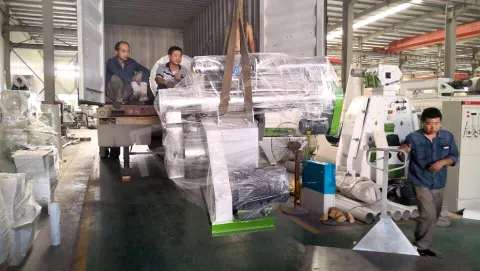
How Large Should the Production Capacity Be?
Capacity should be based on the amount of manure available and the intended market.
If a farm produces only a small amount of manure each day, installing a large commercial line may result in low equipment utilization.
A larger project becomes more reasonable when manure is collected from multiple farms or livestock facilities.
Daily raw-material availability should therefore be calculated before choosing the pellet mill.
The project should also consider seasonal variations.
Manure production may remain relatively stable, but transportation, drying conditions, and fertilizer demand can change throughout the year.
Capacity planning should account for these factors rather than relying solely on the maximum output of the pellet machine.
What Equipment Is Needed for a Complete Line?
A complete cow manure fertilizer production system can contain several sections.
Raw-material handling:
Conveyors, hoppers, and feeding systems transport manure through the process.
Composting:
Fermentation areas or composting equipment stabilize the organic material.
Crushing:
Crushers or grinders reduce large pieces and improve particle uniformity.
Mixing:
Mixers combine manure with other organic or mineral ingredients when required.
Drying:
Dryers reduce excessive moisture when natural drying is insufficient.
Pelletizing:
The pellet mill forms the prepared material into pellets.
Cooling and screening:
These stages stabilize the pellets and remove fines.
Packaging:
Finished fertilizer can be weighed, bagged, sealed, and prepared for transportation.
Not every facility requires every stage.
The appropriate equipment depends on the condition of the manure and the specifications of the final fertilizer.
How Does the Plant Layout Affect Efficiency?
A logical plant layout reduces unnecessary movement of materials.
The processing route should ideally move from raw-material receiving to composting, preparation, pelletizing, cooling, screening, and finished-product storage.
The layout should also provide enough space for equipment maintenance.
Drying systems may require additional space for heat sources, fans, ducts, and dust collection.
Storage areas should be separated from wet raw-material zones where possible.
For commercial projects, vehicle access should also be considered.
Trucks need sufficient space to deliver manure and collect finished fertilizer without interfering with internal production activities.
How Much Does a Manure Fertilizer Project Cost?
There is no universal equipment price because project configurations can be very different.
A small farm may only require basic crushing, mixing, and pelletizing equipment.
A commercial operation may need composting equipment, dryers, crushers, mixers, pellet mills, coolers, screeners, conveyors, packing systems, and storage facilities.
Building construction and utility connections can also represent a substantial part of the investment.
The raw-material condition is particularly important.
If the manure is already partially dried and composted, the project may require less drying equipment. If the manure is extremely wet, drying capacity may become one of the largest components of the project.
Therefore, the total investment should be evaluated as a complete processing system.
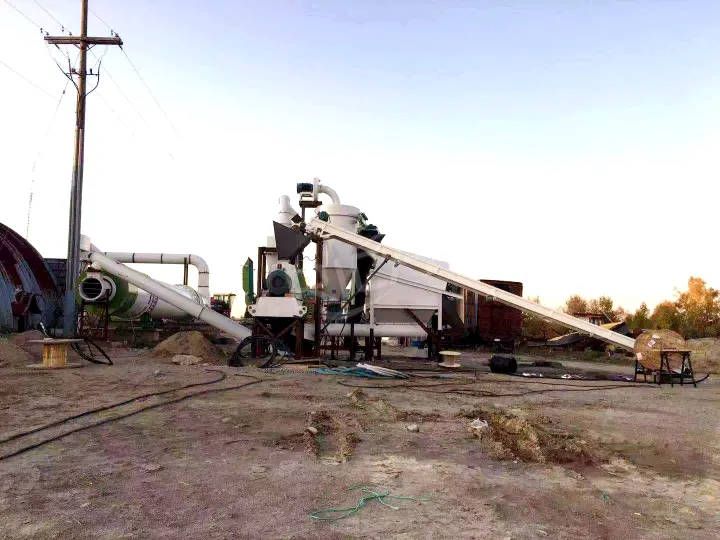
How Can Operating Costs Be Controlled?
Energy consumption is one of the most important operating considerations.
Drying can require substantial energy when large quantities of water need to be removed.
Reducing moisture before mechanical drying can therefore improve efficiency.
Electricity is also consumed by crushers, mixers, pellet mills, conveyors, fans, and screening equipment.
Appropriately sizing the machines can help avoid unnecessary energy consumption.
Labor, maintenance, spare parts, packaging, transportation, and raw-material handling should also be included in the operating budget.
A project that appears inexpensive to build may not necessarily have the lowest long-term operating cost.
Should a Small Farm Invest in Pelletizing?
For some farms, pelletizing can make manure management more convenient.
However, the economics depend on manure availability and the value of the finished fertilizer.
If only a small quantity of manure is generated, the equipment may have low utilization.
A small pelletizing system becomes more practical when manure is collected from multiple livestock operations or when the finished fertilizer has a reliable local market.
Transportation distance also matters.
Because wet manure contains a large amount of water, processing it closer to the source can sometimes reduce transportation requirements.
What Should Be Prepared Before Buying Equipment?
Before requesting a technical proposal, it is useful to prepare several basic pieces of information.
The average amount of manure available per day should be estimated.
Its approximate moisture content should be measured.
The presence of bedding or other materials should be identified.
The intended fertilizer specification should be defined.
The target production capacity and pellet diameter should also be established.
Finally, the available land, building conditions, electricity supply, drying conditions, storage requirements, and packaging method should be considered.
The more complete this information is, the easier it becomes to design a suitable processing system.
How Should Equipment Suppliers Be Compared?
Supplier comparisons should focus on technical suitability rather than equipment price alone.
Different manufacturers may recommend different combinations of dryers, crushers, mixers, pellet mills, coolers, and conveyors.
The important question is whether the proposed configuration can handle the actual manure characteristics and produce the desired fertilizer consistently.
It is also useful to compare installation requirements, spare parts, maintenance procedures, control systems, and technical support.
For companies researching different processing solutions, pelleting machine can be included as one source of technical information during the equipment-selection stage.
The purpose of this research is to understand the process and equipment requirements before making a final investment decision.
Is a Complete Automated Line Necessary?
Automation depends on production scale.
A small farm may operate with manual feeding, simple controls, and manual packaging.
A commercial facility may benefit from automated feeding, centralized controls, automatic weighing, conveyor systems, and automatic bagging.
Automation can improve production consistency and reduce repetitive labor, but it also increases the initial investment.
A balanced approach is usually more practical.
The most important processes should be automated first, while less critical manual operations can remain manual when production volume does not justify additional equipment.
What Does a Practical Production Project Look Like?
Consider a livestock farm that produces a large amount of manure every day.
The first step would be to assess the manure’s moisture and composition.
The farm could then establish a composting area to stabilize the material.
After composting, the material could be screened and crushed before being mixed with other organic ingredients if required.
If natural drying is insufficient, a mechanical dryer could be added.
The prepared material would then enter the pellet mill, followed by cooling and screening.
Finally, the fertilizer pellets could be stored in bags or bulk containers.
This example shows that pelletizing is only one stage of a larger resource-utilization process.
Final Thoughts: What Makes Cow Manure Fertilizer Production Practical?
Turning cow manure into fertilizer pellets is primarily a process of improving the physical handling characteristics of an agricultural residue.
The success of the project depends on several interconnected factors.
First, the manure needs to be collected and stabilized properly. Composting can help reduce instability and prepare the organic material for further processing.
Second, moisture needs to be controlled. Excessive moisture can make pelletizing difficult, while overly dry material may require additional conditioning.
Third, particle size and formulation should be considered. Grinding and mixing can improve consistency when the raw material contains fibers or additional ingredients.
Fourth, the pelletizing, cooling, screening, and storage stages need to be properly matched.
Finally, the production capacity should correspond to the actual amount of manure available and the expected fertilizer demand.
A well-designed system does not necessarily need to be highly automated or extremely large. It should instead be based on realistic raw-material availability, clear product specifications, appropriate equipment capacity, and manageable operating costs.
With suitable processing conditions, cow manure can be converted from a difficult-to-handle livestock residue into a more uniform organic fertilizer product that is easier to store, transport, and apply.