



Moisture control is one of the most important factors in wood drying. Whether the raw material is sawdust, wood chips, wood shavings, bark, or other wood residues, the objective of drying is not simply to remove as much water as possible. The real goal is to achieve a stable and uniform moisture level that is suitable for the next processing stage.
This is especially important in wood pellet production. If sawdust contains too much moisture, pelletizing may become unstable and production efficiency can decrease. If the material is excessively dry, additional energy is consumed and pellet formation may also be affected.
For this reason, industrial wood drying requires a combination of accurate moisture measurement, suitable drying temperature, controlled airflow, stable feeding, appropriate residence time, and reliable equipment.
A properly designed wood dust dryer machine can help continuously reduce moisture while maintaining stable material flow and drying conditions. However, the machine alone does not determine the final moisture content. Effective moisture control requires the entire drying system to be correctly designed and operated.
This article explains how to control moisture during wood drying, what factors affect final moisture content, and how to achieve more consistent results in industrial biomass processing.
Why Is Moisture Control Important in Wood Drying?
Wood naturally contains water.
Freshly processed wood residues can contain a relatively high moisture content, especially when they come from recently harvested timber, wet sawmills, forestry residues, or outdoor storage.
Before the material can be pelletized or used as a fuel, its moisture often needs to be reduced.
Moisture affects:
- Drying energy consumption
- Pelletizing performance
- Fuel value
- Storage stability
- Material flow
- Pellet durability
- Production capacity
- Equipment operation
For example, wet sawdust requires more thermal energy because more water must be evaporated.
If the moisture content varies significantly from batch to batch, the dryer and pellet mill may also experience unstable operating conditions.
Therefore, moisture control should be treated as a continuous process rather than a one-time measurement.
What Is the Ideal Moisture Content for Wood?
There is no single moisture level suitable for every wood-processing application.
The required moisture content depends on what the material will be used for.
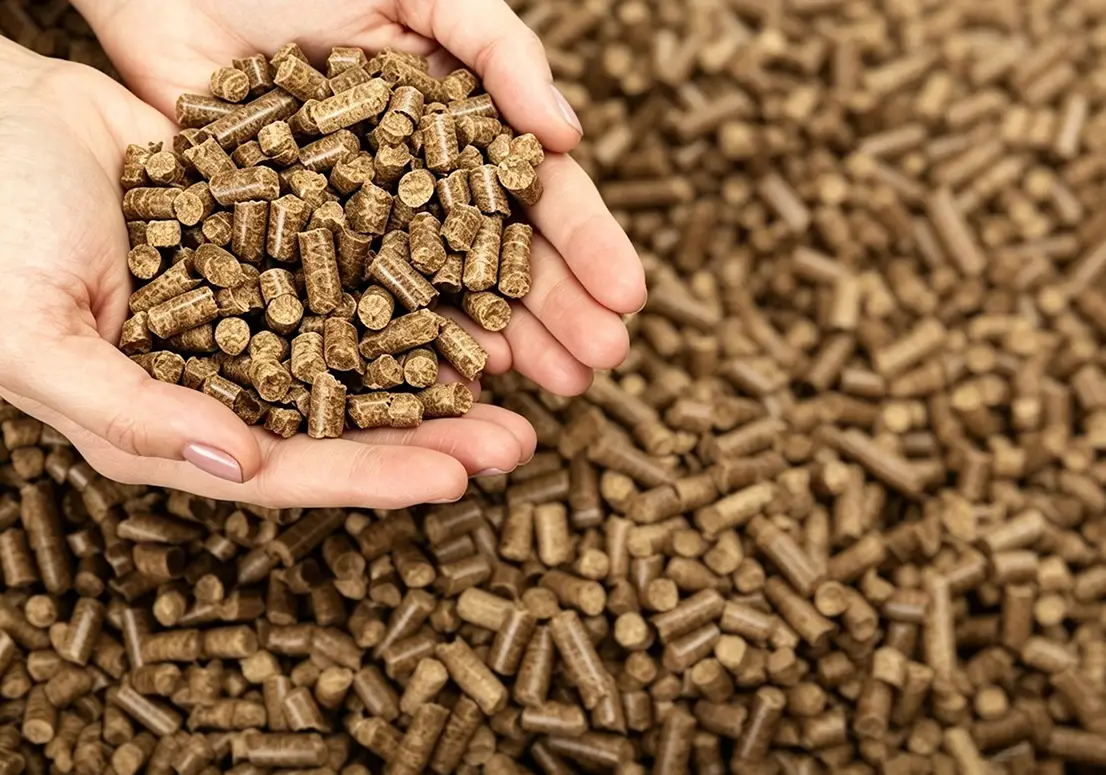
For wood pellet production, a moisture level of approximately 10–15% is commonly used as a general reference before pelletizing. However, the actual target should be determined according to:
- Wood species
- Sawdust particle size
- Raw material composition
- Pellet mill design
- Die compression ratio
- Production capacity
- Required pellet quality
- Local operating conditions
For other applications, the target may be different.
Therefore, operators should avoid using a fixed moisture target without considering the complete production process.
The best target is the moisture level that allows the downstream equipment to operate efficiently and consistently.
How Is Moisture Measured During Wood Drying?
Moisture measurement is the foundation of effective moisture control.
There are several ways to measure moisture.
Laboratory Moisture Testing
A sample can be weighed, dried under controlled conditions, and weighed again.
The difference between the initial and dry weights can be used to calculate moisture content.
This method can provide reliable results, but it requires time and is not ideal for continuous process control.
Portable Moisture Meters
Portable moisture meters can be used to quickly test incoming and outgoing biomass.
They are useful for routine inspections and comparing different raw-material batches.
Online Moisture Sensors
Larger industrial plants may use online moisture monitoring.
Sensors can measure material conditions continuously and provide information to the control system.
This allows operators to identify changes in raw-material moisture and adjust the drying process accordingly.
Using moisture monitoring at both the dryer inlet and outlet provides a much better understanding of dryer performance.
Measure Moisture Before Drying
The first step in controlling final moisture is understanding the initial moisture.
Incoming sawdust can vary significantly depending on:
- Wood species
- Production process
- Season
- Weather
- Storage conditions
- Supplier
- Transportation
- Time between processing and drying
For example, sawdust collected from an indoor sawmill may have a different moisture content from sawdust stored outdoors.
If the dryer is operated using a fixed setting while the incoming moisture changes significantly, the final moisture may also fluctuate.
Therefore, operators should regularly check the incoming material.
Control the Target Moisture
Once initial moisture is known, the next step is to establish a realistic final target.
For pellet production, the target should be selected according to the requirements of the pellet mill.
A target that is too high may result in wet material entering the pelletizer.
A target that is too low may waste thermal energy.
The objective is to create a balance between:
Moisture Removal + Energy Consumption + Pelletizing Performance
This is one of the most important principles of efficient biomass drying.
How Temperature Affects Moisture Control
Temperature provides the energy required to evaporate water.
Increasing hot-air temperature generally increases the potential drying rate, but higher temperature is not always better.
If temperature is too low:
- Drying may be slow
- Residence time may increase
- Final moisture may remain too high
- Production capacity may decrease
If temperature is too high:
- Energy may be wasted
- Material may become excessively dry
- Overheating risks may increase
- Heat-sensitive materials may be affected
The correct temperature should therefore be determined according to material characteristics and dryer design.
For sawdust and other biomass residues, industrial dryers may use relatively high hot-air temperatures, while the actual material temperature remains lower because evaporation consumes heat.
How Airflow Controls Moisture Removal
Airflow is just as important as temperature.
Hot air provides heat, but it also removes water vapor from the drying zone.
As moisture evaporates from sawdust, the surrounding air becomes more humid.
If humid air is not removed efficiently, the drying rate can decrease.
A properly designed exhaust system continuously removes humid air and helps maintain suitable drying conditions.
However, excessive airflow can also cause problems.
Very high airflow may:
- Increase fan electricity consumption
- Increase heat loss
- Carry fine particles into the exhaust
- Increase dust-collection requirements
Therefore, airflow must be balanced according to the material and dryer design.
Controlling Moisture with a Wood Dust Dryer Machine
A wood dust dryer machine is designed to continuously reduce the moisture content of wood dust, sawdust, and similar biomass materials.
A typical industrial system may include:
- Feeding conveyor
- Rotary drying drum
- Hot-air furnace
- Exhaust fan
- Cyclone
- Dust collector
- Material conveyor
- Temperature sensors
- Control cabinet
The wet wood dust enters the dryer through the feeding system.
Inside the rotating drum, internal lifting flights pick up and disperse the material.
The wood dust repeatedly falls through the hot-air stream.
During this process:
- Heat transfers from hot air to the material.
- Moisture inside the particles moves toward the surface.
- Surface moisture evaporates.
- Water vapor enters the air.
- Humid air is removed through the exhaust system.
- The dried material moves toward the discharge end.
The combination of heat, airflow, mixing, and residence time determines the final moisture level.
(Learn more:https://pelletisingmachine.com/sawdust-dryer-machine/)
The Importance of Residence Time
Residence time refers to how long the wood material remains inside the dryer.
If residence time is too short, the material may leave before reaching the required moisture level.
If residence time is too long, the material may become excessively dry.
Residence time depends on:
- Drum length
- Drum diameter
- Drum speed
- Drum inclination
- Internal lifting flights
- Feed rate
- Airflow
- Material density
A rotary dryer allows these parameters to be adjusted to achieve the required drying performance.
How Feed Rate Affects Moisture
Feed rate has a direct influence on moisture control.
If too much wet material enters the dryer at once, the available heat may not be sufficient to remove the required amount of water.
The result may be higher outlet moisture.
If the feed rate is too low, the dryer may consume energy without processing enough material.
This increases energy consumption per ton.
Stable feeding is therefore essential.
Automatic feeders, belt conveyors, screw conveyors, or other controlled feeding systems can help maintain consistent material flow.
Why Material Particle Size Matters
Particle size has a significant effect on drying.
Fine sawdust generally dries faster because it has a large surface area.
Larger wood chips may require more time because moisture inside the particles must travel a longer distance before reaching the surface.
If a material stream contains a mixture of very fine dust and large chips, different particles may dry at different rates.
This can result in uneven final moisture.
For this reason, crushing and screening may be necessary before drying.
A more consistent particle size can improve drying uniformity.
Controlling Moisture Uniformity
Average moisture content alone does not tell the complete story.
Suppose a sample contains:
- Some particles at 8% moisture
- Some particles at 18% moisture
The average may appear acceptable, but the material is still uneven.
When this material enters a pellet mill, the wet particles and dry particles may behave differently.
Moisture uniformity can be improved by:
- Proper material preparation
- Good mixing inside the dryer
- Stable feeding
- Appropriate residence time
- Even hot-air distribution
- Correct drum design
- Regular moisture testing
A rotary dryer with properly designed internal flights can continuously mix and lift biomass, helping improve contact between the material and hot air.
How to Prevent Over-Drying
Over-drying is an important moisture-control problem.
Operators sometimes assume that a lower moisture content means better drying.
This is not always true.
If the target is 12% but the material leaves the dryer at 7%, additional heat has been used without providing a necessary benefit.
Over-drying can:
- Increase fuel consumption
- Increase drying costs
- Reduce thermal efficiency
- Affect pelletizing behavior
- Increase the risk of overheating
A better approach is to establish a reasonable target and adjust the dryer accordingly.
How to Prevent Under-Drying
Under-drying occurs when the material leaves the dryer with excessive moisture.
Common causes include:
- Initial moisture is higher than expected
- Feed rate is too high
- Temperature is too low
- Airflow is insufficient
- Residence time is too short
- Heat source is unstable
- Material is too coarse
- Dryer is overloaded
If outlet moisture is consistently too high, operators should identify the actual cause rather than simply increasing temperature.
For example, reducing feed rate or improving airflow may solve the problem more effectively than continuously increasing the heat-source temperature.
Moisture Control Through Exhaust Temperature
Exhaust temperature can provide useful information about dryer operation.
When wet material enters the dryer, a large amount of heat is consumed by water evaporation.
As the material becomes drier, the behavior of the exhaust air changes.
Therefore, monitoring exhaust temperature can help operators understand whether the dryer is operating under stable conditions.
However, exhaust temperature should not be used as the only indicator of final moisture.
It should be combined with:
- Material moisture measurement
- Inlet temperature
- Feed rate
- Airflow
- Initial moisture
- Production rate
This provides a more complete picture.
How Heat Source Stability Affects Moisture
A stable heat source is essential for consistent drying.
If the heat source fluctuates significantly, the amount of thermal energy entering the dryer also changes.
This can cause variations in final moisture.
Common heat sources include:
- Biomass
- Natural gas
- Diesel
- Steam
- Hot water
- Other industrial heat sources
For biomass pellet plants, suitable biomass residues may sometimes be used as fuel for the drying system.
The heat source should be selected according to local fuel availability, moisture, heating value, environmental requirements, and project conditions.
How to Control Moisture in Different Wood Materials
Different materials may require different drying strategies.
Sawdust
Sawdust generally has a large surface area and can dry relatively quickly.
The main challenge is controlling dust and preventing excessive carryover.
A continuous rotary dryer can provide good mixing and hot-air contact.
Wood Chips
Wood chips are larger and may require longer residence time.
The dryer should be designed to provide sufficient heat transfer without excessively increasing temperature.
Wood Shavings
Wood shavings are lightweight and may be easily carried by airflow.
Air velocity and dust collection should therefore be carefully controlled.
Bark
Bark can have variable moisture and particle size.
Good material preparation and stable feeding are particularly important.
How Storage Affects Moisture Control
Drying does not end when the material leaves the dryer.
Dried wood residues can absorb moisture from the surrounding environment.
This is particularly important in humid climates.
If dried sawdust is exposed to rain or humid air, its moisture may increase again.
This can reduce the benefit of the drying process.
Proper storage should therefore include:
- Covered storage
- Protection from rain
- Limited exposure to humid air
- Good material handling
- Suitable ventilation
- Efficient transfer to the next processing stage
For pellet plants, dried material should ideally move from the dryer to the pellet mill through a controlled conveying and storage system.
Moisture Control Before Pelletizing
Wood pellet production typically requires relatively consistent raw-material moisture.
A typical process is:
Wood Residues → Crushing → Grinding → Drying → Pelletizing → Cooling → Screening → Packing
The drying system prepares the material for pelletizing.
If the material is too wet, pellet formation can become unstable.
If the material is too dry, pellet formation may also become difficult depending on the raw material and die configuration.
Therefore, the dryer should be designed as part of the complete pellet production process.
How Automation Improves Moisture Control
Automation can significantly improve moisture consistency in larger plants.
A control system can monitor:
- Inlet temperature
- Outlet temperature
- Feed rate
- Drum speed
- Fan operation
- Heat-source operation
- Material flow
- Moisture measurements
- Safety alarms
Based on these measurements, the system can adjust operating parameters.
For example, if the incoming moisture increases, the control system may increase the thermal input or adjust the feed rate.
If the incoming material becomes drier, the system can reduce heat input to prevent over-drying.
This type of automatic adjustment can improve both moisture consistency and energy efficiency.
How to Calculate Water Removal
Understanding the water evaporation requirement is important when selecting drying equipment.
Suppose a plant processes 8 tons of wet sawdust per hour at 40% moisture.
The material contains:
- 3.2 tons/hour of water
- 4.8 tons/hour of dry solids
If the target moisture is 12%, the final product weight can be estimated as:
4.8 ÷ 0.88 = 5.45 tons/hour
Therefore, approximately:
8 − 5.45 = 2.55 tons/hour
of water needs to be removed.
This calculation helps engineers determine the required dryer evaporation capacity.
It also demonstrates why dryer capacity cannot be evaluated simply by looking at tons of wet material per hour.
Energy Efficiency and Moisture Control
Good moisture control directly contributes to energy efficiency.
The dryer should remove only the amount of water required to achieve the target moisture.
Energy efficiency can be improved by:
- Measuring initial moisture
- Setting a realistic final moisture target
- Maintaining stable feeding
- Optimizing hot-air temperature
- Optimizing airflow
- Avoiding excessive residence time
- Preventing heat loss
- Maintaining the dryer
- Monitoring outlet moisture
- Preventing moisture reabsorption
These measures can reduce unnecessary fuel consumption.
Common Moisture-Control Problems
Problem 1: Outlet Moisture Is Too High
Possible causes:
- Excessive feed rate
- Low temperature
- Insufficient airflow
- Short residence time
- High initial moisture
- Large particle size
Problem 2: Outlet Moisture Is Too Low
Possible causes:
- Excessive temperature
- Low feed rate
- Excessive residence time
- Excessive airflow
- Initial material is already relatively dry
Problem 3: Moisture Is Uneven
Possible causes:
- Uneven feeding
- Poor material preparation
- Uneven hot-air distribution
- Inadequate mixing
- Excessive particle-size variation
Problem 4: Moisture Changes With the Season
Possible causes:
- Changes in raw-material source
- Outdoor storage
- Rainfall
- Temperature changes
- Humidity changes
The solution is to monitor raw-material moisture regularly and adjust the drying process accordingly.
How to Choose a Wood Dust Dryer Machine
When selecting a wood dust dryer machine, consider the complete project rather than only the equipment price.
Important factors include:
1. Raw Material
Is the material sawdust, wood dust, wood chips, wood shavings, bark, or a mixture?
2. Initial Moisture
What is the normal moisture range?
3. Target Moisture
What moisture content is required after drying?
4. Production Capacity
How many tons of wet material need to be processed per hour?
5. Water Evaporation
How many tons of water need to be removed per hour?
6. Heat Source
What fuel or heat source is available?
7. Particle Size
How fine or coarse is the material?
8. Dust Collection
What type of dust collection and exhaust system is required?
9. Automation
Is manual control sufficient, or is automatic moisture and temperature control required?
10. Future Expansion
Will production capacity increase in the future?
These factors help determine the appropriate dryer configuration.
RICHI Wood Drying and Pelletizing Solutions
For commercial wood pellet production, a dryer should not be considered as an isolated machine.
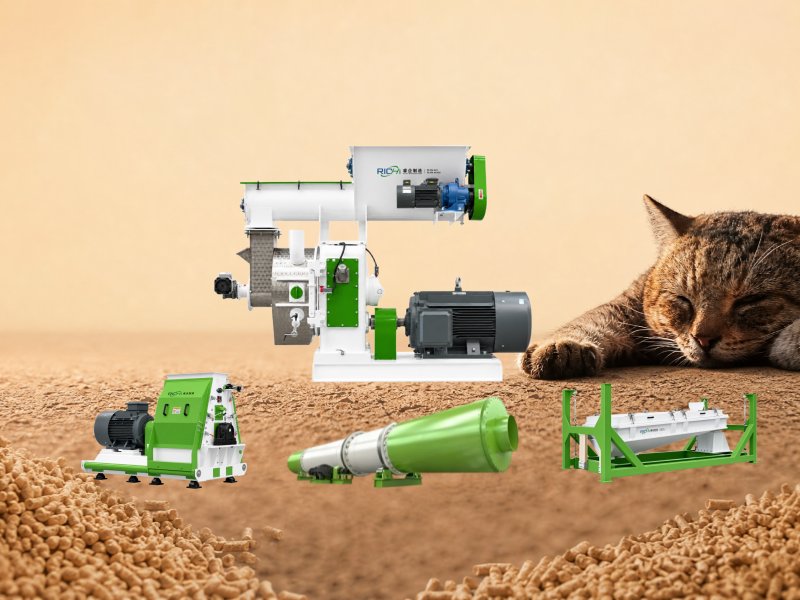
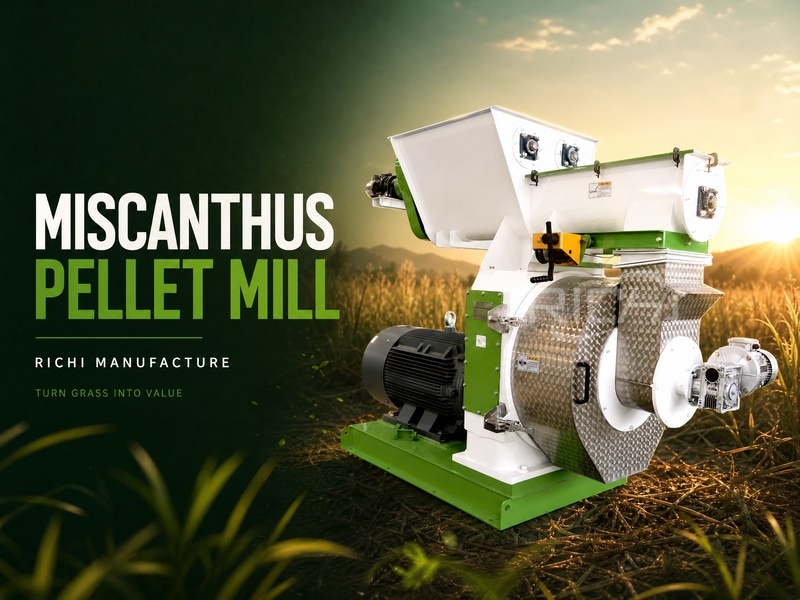
RICHI Manufacture can design complete biomass processing solutions based on the customer’s raw material, moisture content, production capacity, and final product requirements.
A complete wood pellet production line may include:
- Raw material receiving
- Cleaning
- Wood chipper
- Crusher
- Hammer mill
- Wood dryer
- Hot-air furnace
- Cyclone
- Dust collector
- Conveyors
- Pellet mill
- Pellet cooler
- Vibrating screen
- Packing machine
- Electrical control system
The drying section can be customized according to the actual water evaporation requirement.
This approach helps ensure that the dryer capacity matches the pellet mill and other downstream equipment.
Frequently Asked Questions
How do you control moisture during wood drying?
Moisture is controlled by adjusting drying temperature, airflow, feed rate, residence time, and heat input according to the initial and target moisture content. Regular moisture measurement is also important.
What moisture content is suitable for sawdust pelletizing?
Around 10–15% is often used as a general reference, but the optimum moisture depends on the wood material and pelletizing conditions.
What is a wood dust dryer machine?
A wood dust dryer machine is industrial equipment designed to reduce the moisture content of wood dust and similar biomass materials using controlled heat and airflow. Rotary drying systems are commonly used for continuous processing.
Can wet sawdust be pelletized without drying?
If the sawdust contains excessive moisture, pelletizing may become unstable. Drying is normally required when the raw material moisture is outside the suitable range for the pellet mill.
Does particle size affect moisture control?
Yes. Fine particles generally dry faster, while larger particles may require longer residence time. Particle-size uniformity can also improve moisture consistency.
How can I prevent sawdust from becoming too dry?
Monitor outlet moisture and adjust heat input, feed rate, airflow, and residence time. Avoid operating the dryer at unnecessarily high temperatures.
Why does dried sawdust absorb moisture again?
Wood is hygroscopic, meaning it can exchange moisture with surrounding air. Exposure to humid conditions or rain can increase the moisture content again.
How can moisture uniformity be improved?
Stable feeding, consistent particle size, good material mixing, even hot-air distribution, and appropriate residence time can all improve moisture uniformity.
Can moisture be controlled automatically?
Yes. Industrial drying systems can use temperature sensors, moisture sensors, automatic feeding, variable-speed fans, and control systems to maintain more stable operating conditions.
How do I calculate the drying capacity I need?
Dryer selection should consider wet feed rate, initial moisture, target moisture, dry solids content, and required water evaporation per hour. Nominal tons per hour alone are not sufficient.
Conclusion
Controlling moisture during wood drying is essential for efficient biomass processing and stable wood pellet production.
The objective is not simply to remove the maximum amount of water. Instead, the drying process should consistently achieve the moisture level required by the next processing stage while minimizing unnecessary energy consumption.
Effective moisture control depends on several factors, including initial moisture, target moisture, drying temperature, airflow, residence time, particle size, feed rate, heat-source stability, and storage conditions.
A properly designed wood dust dryer machine can provide continuous drying and controlled material movement, while supporting stable moisture reduction for sawdust and other wood residues.
However, the best results come from treating drying as part of a complete processing system. Accurate moisture measurement, stable feeding, appropriate equipment selection, automatic controls, efficient heat utilization, and proper storage all contribute to better results.
For wood pellet production, RICHI can integrate drying with grinding, pelletizing, cooling, screening, conveying, dust collection, and packing equipment to create a complete customized production solution.
With proper moisture management, wood drying can improve pelletizing stability, reduce unnecessary energy consumption, increase production consistency, and provide a more reliable foundation for efficient biomass processing.