




Moisture is one of the least visible but most influential factors in organic fertilizer production.
When chicken manure enters a processing plant, its water content can vary considerably. The manure may have been recently collected, stored for several days, mixed with bedding, partially composted, or exposed to different environmental conditions.
These differences can strongly affect drying, mixing, granulation, cooling, and storage.
As a result, moisture management should be treated as a central part of the production strategy.
Why Fresh Manure Behaves Differently from Processed Material
Fresh manure is usually more difficult to handle than stabilized material.
It may contain more water, larger clumps, and more variable physical characteristics.
Composting or other appropriate pretreatment can change the material structure and make subsequent mechanical processing more predictable.
However, stabilization does not eliminate the need for moisture management.
The material still needs to reach a condition suitable for the selected granulation process.
This is why manure fertilizer lines often combine biological processing with mechanical conditioning.
The Dryer Has a Specific Job
Many people think the purpose of a dryer is simply to make the material dry.
That is too simplistic.
The actual role of drying equipment is to bring the material into a more suitable moisture range for the next process.
Over-drying can waste energy and may create unnecessary dust.
Under-drying can leave the feedstock too sticky or difficult to granulate.
The optimum point depends on the raw material, formulation, machine type, and product requirements.
For this reason, drying capacity should be calculated from real material conditions instead of using a generic equipment number.
Where Does Moisture Matter Most?
Moisture affects several parts of the line at once.
In the crusher, excessive moisture can increase sticking and reduce effective crushing.
In the mixer, wet material may form clumps rather than distribute evenly.
At the granulation stage, moisture influences particle formation and mechanical stability.
During cooling, residual moisture affects the final product condition.
In packaging, excessive moisture can make storage more difficult.
Because the same variable affects so many stages, moisture control has a system-wide impact.
Conditioning Before Granulation
Once the manure has been dried to a suitable level, the material may still require additional conditioning.
A mixer can distribute different raw materials and help create a uniform feedstock.
Water or other controlled liquid additions may sometimes be used as part of formulation management, but such decisions should be based on the specific material and production process.
The goal is a consistent feed entering the granulation machine.
In commercial production, consistency is often more valuable than maximizing instantaneous output.
Choosing the Right Granulation Equipment
Once the feedstock is appropriately prepared, the forming process becomes the next priority.
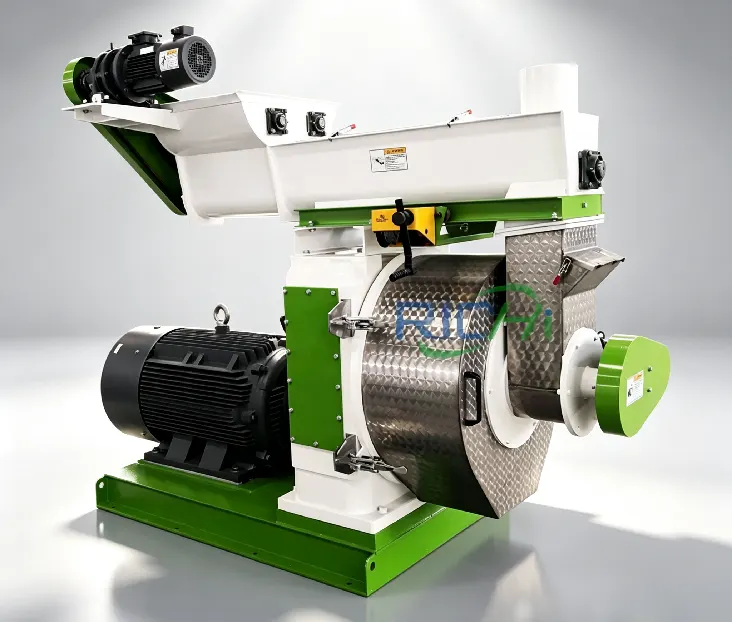
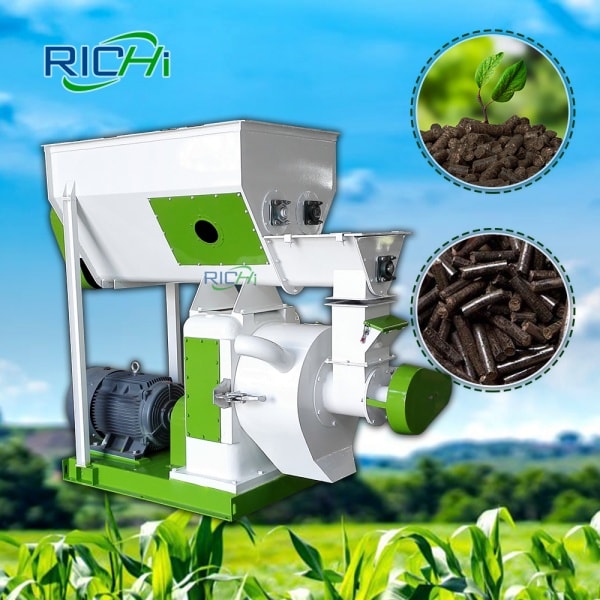
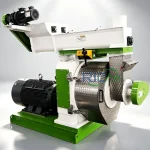
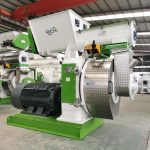
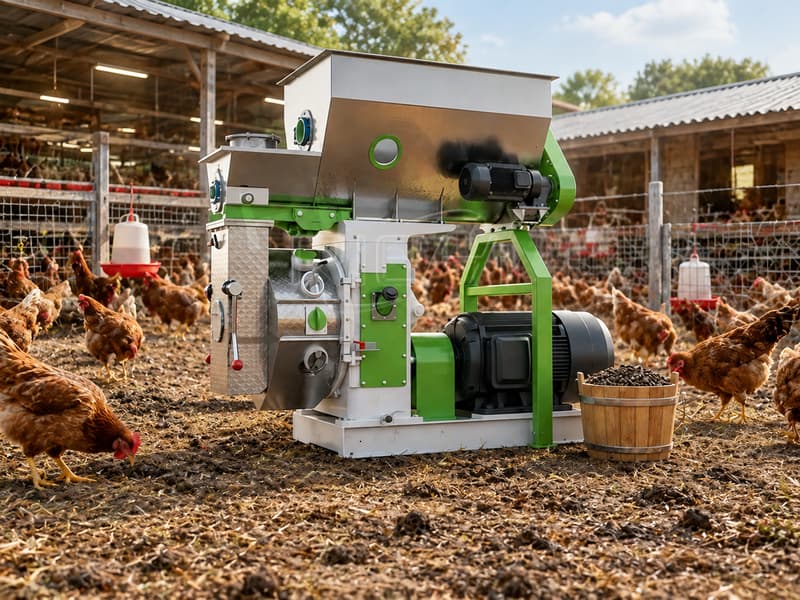
A chicken manure pellets machine is selected based on the intended production scale, raw-material condition, and final product requirements.
The machine must be able to handle the prepared material consistently.
Capacity should not be considered independently from moisture.
Two batches containing the same weight of manure can behave differently if their moisture levels differ substantially.
That means a machine specification should always be interpreted together with the feedstock condition under which the quoted capacity applies.
Moisture and Granule Strength
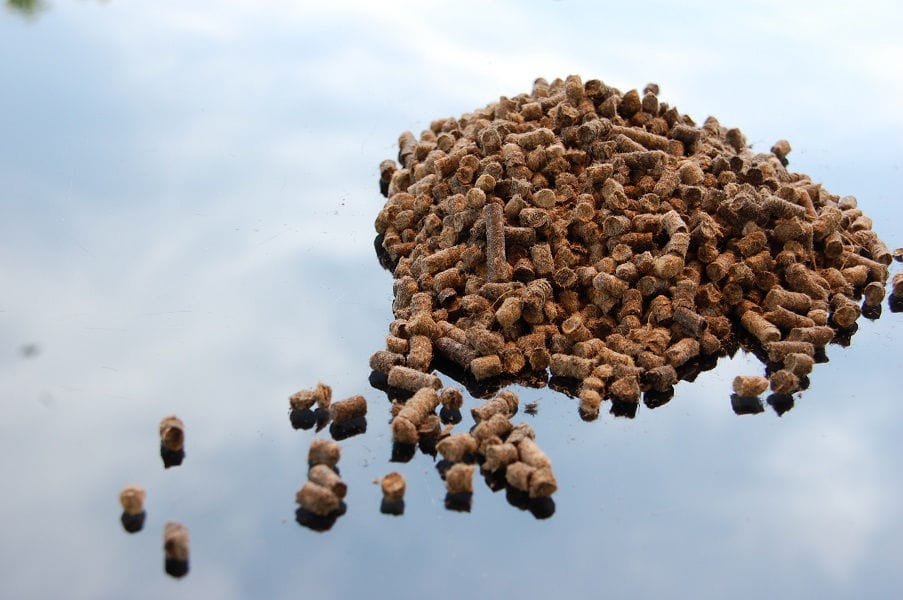
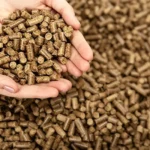
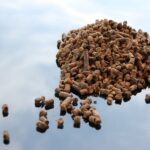
A finished fertilizer pellet must remain stable during handling.
If granules are too fragile, they may generate fines during conveying, storage, loading, and transportation.
If the material condition is inappropriate during forming, the result may be an uneven product stream.
This is one reason producers should monitor particle quality after granulation rather than focusing only on production rate.
A useful production target combines acceptable throughput with stable granule formation.
The Role of Cooling
After granulation, cooling helps prepare the product for subsequent handling.
Fresh granules may retain heat and moisture generated during the production process.
A properly sized cooling system can help bring the fertilizer into a condition more suitable for screening and packaging.
The design of the cooling section should therefore reflect the output of the pelletizing machine.
An undersized cooler can become a production bottleneck, while excessive cooling capacity may increase project cost without providing proportional value.
Screening Makes Moisture Problems Visible
Screening is not only about appearance.
Changes in granule size distribution can provide clues about upstream process conditions.
If a sudden increase in fines occurs, operators can review moisture, feeding consistency, formulation, and machine settings.
This turns the screening section into a useful quality-control point.
Recycling unsuitable particles can also reduce material losses, depending on the system design.
What Happens When Raw Materials Change?
Commercial fertilizer plants often process more than one source of manure.
One batch may come from a poultry farm with dry bedding.
Another may come from a source where the manure has much higher moisture.
Even when the product specification remains the same, the process settings may need adjustment.
A flexible production line should therefore have enough control over feeding and moisture management to accommodate reasonable material variation.
This is one of the biggest differences between a laboratory concept and an industrial production system.
Can One Production Line Handle Multiple Organic Materials?
In many situations, yes, but the equipment configuration should be designed accordingly.
Producers may combine chicken manure with crop residues, composted materials, or other organic ingredients.
Different raw materials have different bulk densities and moisture characteristics.
This makes the mixer and feeding system particularly important.
(Related Post:https://www.richipelletmill.com/organic-fertilizer-production-line/)
Consistent dosing helps ensure that the final formulation remains stable.
The granulation system then works with a more predictable feedstock.
A Production Line Should Be Designed Backward from the Product
Instead of starting with the question “Which pellet machine should we buy?”, a producer can work backward.
First define the finished fertilizer.
Then determine the desired pellet size and packaging.
Then establish the required hourly output.
Then identify the raw materials and moisture range.
Then determine what pretreatment is necessary.
Only after this process should the equipment configuration be finalized.
This method avoids the common problem of purchasing equipment first and discovering later that additional processing stages are required.
Small Projects and Medium Plants
The same principle applies to different project scales.
A smaller agricultural operation may use a relatively compact process with fewer handling stages.
A commercial fertilizer manufacturer may require a continuous system with automatic feeding, large drying capacity, cooling, screening, and packaging.
The difference is not simply the size of the granulator.
The entire process must scale together.
For larger pellet plant, material movement, dust management, electrical control, maintenance access, and packaging logistics become increasingly important.
How Can Producers Reduce Unnecessary Energy Use?
Drying usually represents one of the most energy-intensive stages in a manure processing project.
For this reason, operators should understand how much water must actually be removed.
Pre-drying, natural moisture reduction, proper storage, and controlled feedstock preparation can all influence the dryer workload.
The objective is not to eliminate drying through unrealistic assumptions. It is to avoid processing more water than the production system actually needs to handle.
Good moisture management is therefore both a quality issue and an operating-cost issue.
Why Testing Before Installation Matters
Sample testing can reveal problems that are difficult to see from a raw-material description.
A supplier can examine how the material behaves during feeding, drying, crushing, mixing, and granulation.
This information can help determine whether the planned equipment configuration is appropriate.
For investors, testing can also improve confidence in the project design before a large equipment purchase is finalized.
Final Thoughts
Moisture control is not a single setting on a dryer.
It is a production strategy that influences almost every stage of chicken manure fertilizer manufacturing.
A stable system keeps the raw material within an appropriate operating range, prepares it consistently, forms uniform granules, cools them correctly, and screens the final product before packaging.
For operators, the key lesson is simple: the quality of the granules often reflects the quality of the preparation process.
A well-matched combination of drying, mixing, granulation, cooling, and screening can transform variable poultry waste into a much more predictable fertilizer product.
For additional technical discussions on organic fertilizer machinery and production processes, readers can also explore the blog here.