
The global livestock industry is becoming increasingly competitive. As farms expand and demand for animal products continues to rise, feed manufacturers are facing new challenges in production capacity, quality control, and cost management.
For modern agricultural enterprises, feed production is no longer simply about processing raw materials into pellets. It requires a complete strategy that combines advanced equipment, efficient workflow design, reliable management, and long-term planning.
A well-designed animal feed production line allows businesses to produce high-quality feed efficiently while maintaining stable operating costs. Whether supplying internal farms or serving external customers, a professional production system provides the foundation for sustainable growth.
The Growing Importance of Commercial Feed Manufacturing
In many regions, livestock farming is shifting from small-scale operations toward larger commercial models. As the number of animals increases, the demand for consistent and reliable feed supply becomes more important.
Large farms cannot rely only on traditional feeding methods because they require:
- Stable daily feed output
- Consistent nutritional quality
- Lower production costs
- Efficient storage and transportation
- Flexible feed formulas
A commercial feed factory helps businesses achieve these goals by providing better control over the entire production process.
Instead of purchasing finished feed at changing market prices, companies can manage raw materials and production schedules according to their own needs.
Planning the Right Capacity for Large Feed Projects
One of the biggest challenges when building a commercial feed factory is determining the correct production capacity.
A factory should be designed according to actual market demand rather than simply choosing the largest possible equipment.
Important considerations include:
- Current livestock population
- Regional feed demand
- Available raw materials
- Future expansion plans
- Investment capability
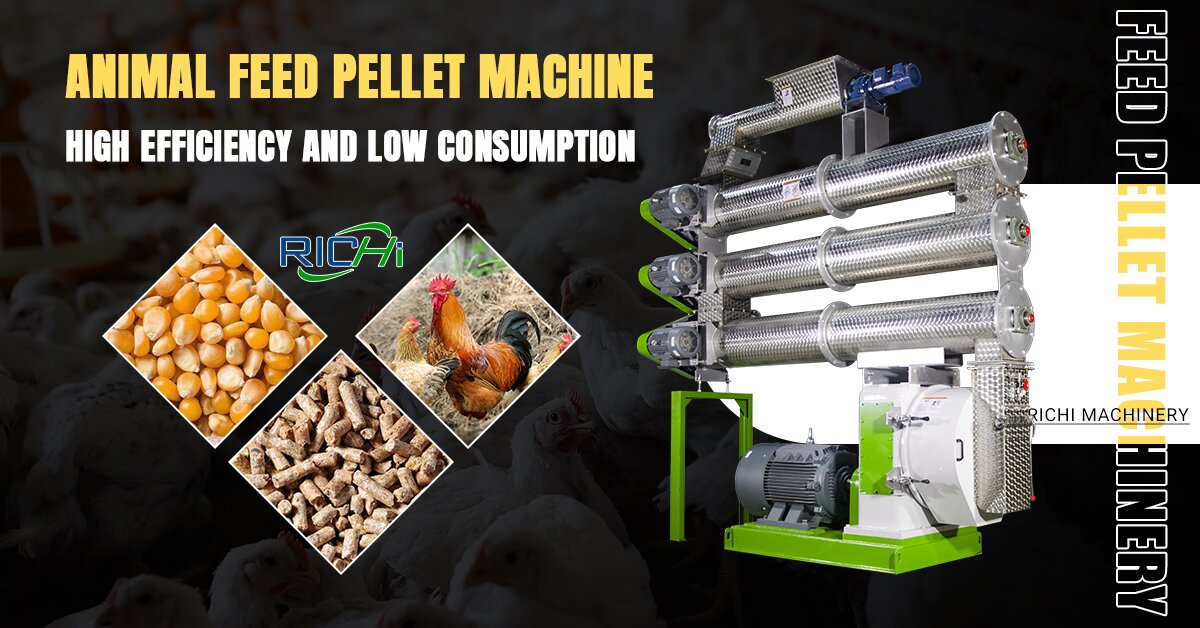
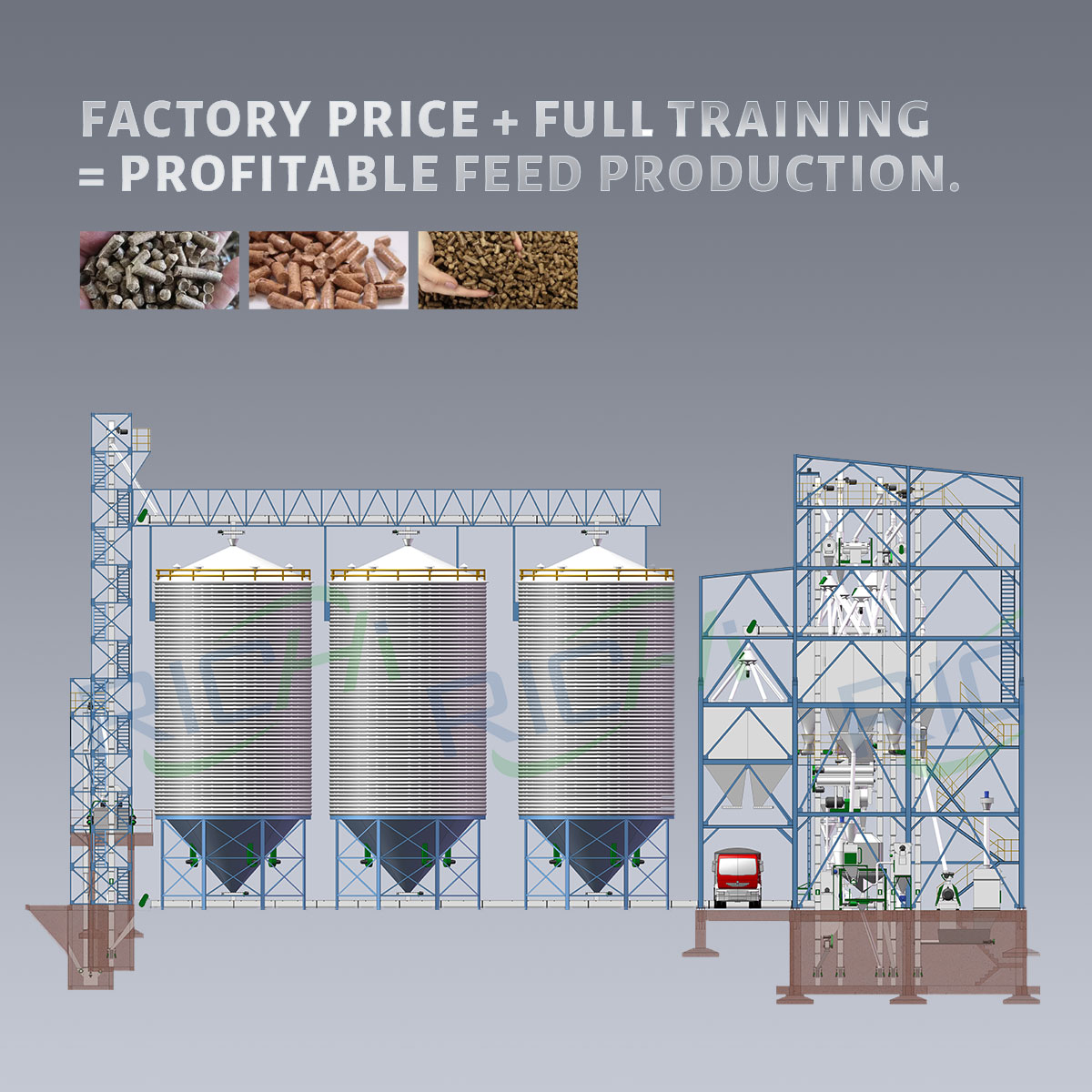
For enterprises that need large-scale poultry feed production, a 10 T/H chicken feed plant solution can provide strong production capability for commercial operations.
This type of project is suitable for companies that operate large farms, supply feed to multiple customers, or plan to develop regional feed distribution networks.
A properly designed capacity ensures that equipment operates efficiently without unnecessary investment pressure.
Building an Efficient Feed Production Process
A successful feed factory requires a smooth and organized production workflow.
Every stage influences the final product quality and production efficiency.
Raw Material Receiving and Storage
The first stage begins with raw material management.
Common feed ingredients include:
- Corn
- Wheat
- Soybean meal
- Bran
- Protein supplements
- Minerals and additives
Proper storage systems protect materials from moisture, contamination, and quality loss.
Large factories usually require automated storage and transportation systems to improve efficiency.
Grinding and Particle Size Control
Grinding plays an important role in feed quality.
Different animals require different feed structures. Proper particle size improves digestion and helps create better pellet quality.
(Related Post: https://www.richipelletmill.com/animal-feed-mill-equipment-for-sale/)
Advanced grinding systems can process various raw materials while maintaining stable performance.
Accurate Ingredient Mixing
The mixing process determines nutritional consistency.
In large-scale production, even small differences in ingredient distribution can affect feed quality. Therefore, accurate weighing and efficient mixing equipment are essential.
Modern factories use automated systems to control ingredient ratios and reduce human error.
Pelletizing and Quality Improvement
Pellet production transforms mixed materials into compact feed products.
The pelletizing process improves:
- Feed handling
- Storage efficiency
- Transportation convenience
- Animal feeding performance
Professional equipment selection is important because pellet quality directly affects customer satisfaction.
Cooling, Screening, and Packaging
After pellet formation, cooling reduces temperature and removes excess moisture.
Screening systems separate high-quality pellets from broken materials, ensuring consistent final products.
Packaging equipment protects feed quality and improves logistics efficiency.
A complete production process allows factories to maintain stable output and reduce unnecessary waste.
The Role of Advanced Equipment in Production Efficiency
Large feed factories depend heavily on equipment performance. Poor equipment selection can increase maintenance costs and reduce production efficiency.
Professional manufacturers focus on several important aspects:
Stable Operation
Industrial feed factories often operate continuously. Equipment must maintain reliable performance under long working hours.
Energy Efficiency
Lower energy consumption reduces production costs and improves profitability.
Easy Maintenance
Simple maintenance procedures help reduce downtime and improve productivity.
Flexible Production
Modern factories need to produce different feed formulas according to market requirements.
Companies such as Richi manufacture provide customized production solutions based on customer needs, helping businesses select suitable equipment configurations.
Automation Technology Improves Large Feed Factory Management
As feed factories become larger, traditional manual management methods are no longer sufficient. Modern production requires accurate control, efficient operation, and real-time monitoring.
Automation technology helps businesses improve every stage of production.
Automatic Ingredient Control
Manual weighing can create errors and affect feed quality. Automated batching systems ensure that every ingredient is added according to the correct formula.
This improves consistency between different production batches and reduces material waste.
Centralized Production Management
Modern control systems allow operators to monitor the entire production process from a single platform.
Important information such as:
- Equipment status
- Production speed
- Material consumption
- Output performance
can be monitored in real time.
This helps managers identify problems quickly and optimize factory operation.
Production Data Analysis
Digital systems collect valuable production information. Businesses can analyze this data to improve efficiency and reduce unnecessary expenses.
Data-based management will become increasingly important as feed manufacturing continues to develop.
Reducing Production Costs Through Better Planning
Profitability in feed manufacturing depends not only on production volume but also on cost management.
Several strategies can help reduce operating expenses.
Optimizing Raw Material Purchasing
Raw materials represent a major part of feed production costs. Establishing reliable supply channels helps businesses maintain stable prices.
Local sourcing can also reduce transportation expenses.
Improving Energy Efficiency
Modern equipment is designed to use energy more effectively.
Efficient motors, optimized processing systems, and improved production workflows can reduce electricity consumption.
Reducing Material Loss
Proper storage, accurate weighing, and efficient processing reduce unnecessary waste.
Even small improvements can create significant savings in large-scale production.
Customized Solutions for Different Feed Businesses
Every feed manufacturer has different goals. A factory supplying feed for internal farms may have different requirements compared with a commercial supplier serving multiple customers.
A customized project design should consider:
- Feed types
- Production capacity
- Raw material characteristics
- Factory size
- Local market conditions
- Future development plans
This approach ensures that the production system matches the business model.
A professional supplier does not simply provide machines but develops a complete production strategy.
Challenges Faced by Large Feed Factory Investors
Although large-scale feed production offers many opportunities, investors should also understand potential challenges.
High Initial Investment
Large factories require significant investment in equipment, buildings, installation, and operation preparation.
A detailed financial plan is necessary before starting construction.
Complex Project Management
Large production systems involve many processes and equipment units. Professional planning helps ensure smooth installation and operation.
Skilled Operation Requirements
Even advanced equipment requires trained operators. Employee education and technical support are important for maintaining stable production.
Market Competition
The feed industry is highly competitive. Businesses need efficient production, reliable quality, and strong customer relationships to succeed.
Understanding these challenges helps investors prepare better strategies.
Sustainable Development of the Feed Industry
Sustainability is becoming an important direction for agricultural development.
Modern feed factories contribute to sustainable farming by improving resource utilization and reducing waste.
Many agricultural by-products can be transformed into valuable feed ingredients through proper processing technology.
Benefits include:
- Lower raw material waste
- Improved resource efficiency
- Reduced environmental impact
- Additional economic value from agricultural residues
Sustainable feed manufacturing helps create a more balanced agricultural system.
How to Evaluate a Feed Equipment Supplier
Choosing the right supplier is a critical step in building a successful feed factory.
Investors should evaluate:
Technical Experience
A supplier with experience in different feed projects can provide more practical solutions.
Engineering Capability
Complete project support, including layout design and installation guidance, improves project success.
Equipment Quality
Reliable equipment reduces maintenance costs and ensures long-term operation.
After-Sales Support
Technical assistance after installation is important for solving operational issues.
Before making investment decisions, businesses can find out here now to learn more about feed factory planning, equipment selection, and industry development strategies.
Future Trends in Large-Scale Feed Manufacturing
The future of feed production will focus on efficiency, automation, and intelligent management.
Several trends are expected to influence the industry:
Smart Manufacturing
More factories will use digital systems to improve production control and decision-making.
Flexible Production
Manufacturers will need systems that can produce different feed types according to changing market demand.
Energy-Saving Technology
Reducing energy consumption will become increasingly important as operating costs rise.
Integrated Agricultural Development
More companies will combine crop production, feed manufacturing, and livestock farming into complete agricultural systems.
These trends will create new opportunities for businesses that invest in modern production technology.
Conclusion
Large-scale feed manufacturing requires careful planning, advanced technology, and efficient management. A successful factory is not created simply by purchasing equipment; it requires a complete solution based on production goals and market conditions.
By selecting suitable capacity, optimizing production processes, and adopting modern automation technology, businesses can improve efficiency and strengthen their competitive advantage.
A professional feed factory provides more than daily production capacity. It creates a foundation for stable growth, cost control, and long-term development in the livestock industry.
As global demand for animal products continues to increase, efficient feed manufacturing will remain a key factor supporting the future of modern agriculture.